AI Adoption in Italy: SMEs Challenges Uncovered 2023
Discover insights from 3 AI studies on GitHub and Stack Overflow revealing adoption barriers for Italian SMEs. Learn how to overcome these challenges.
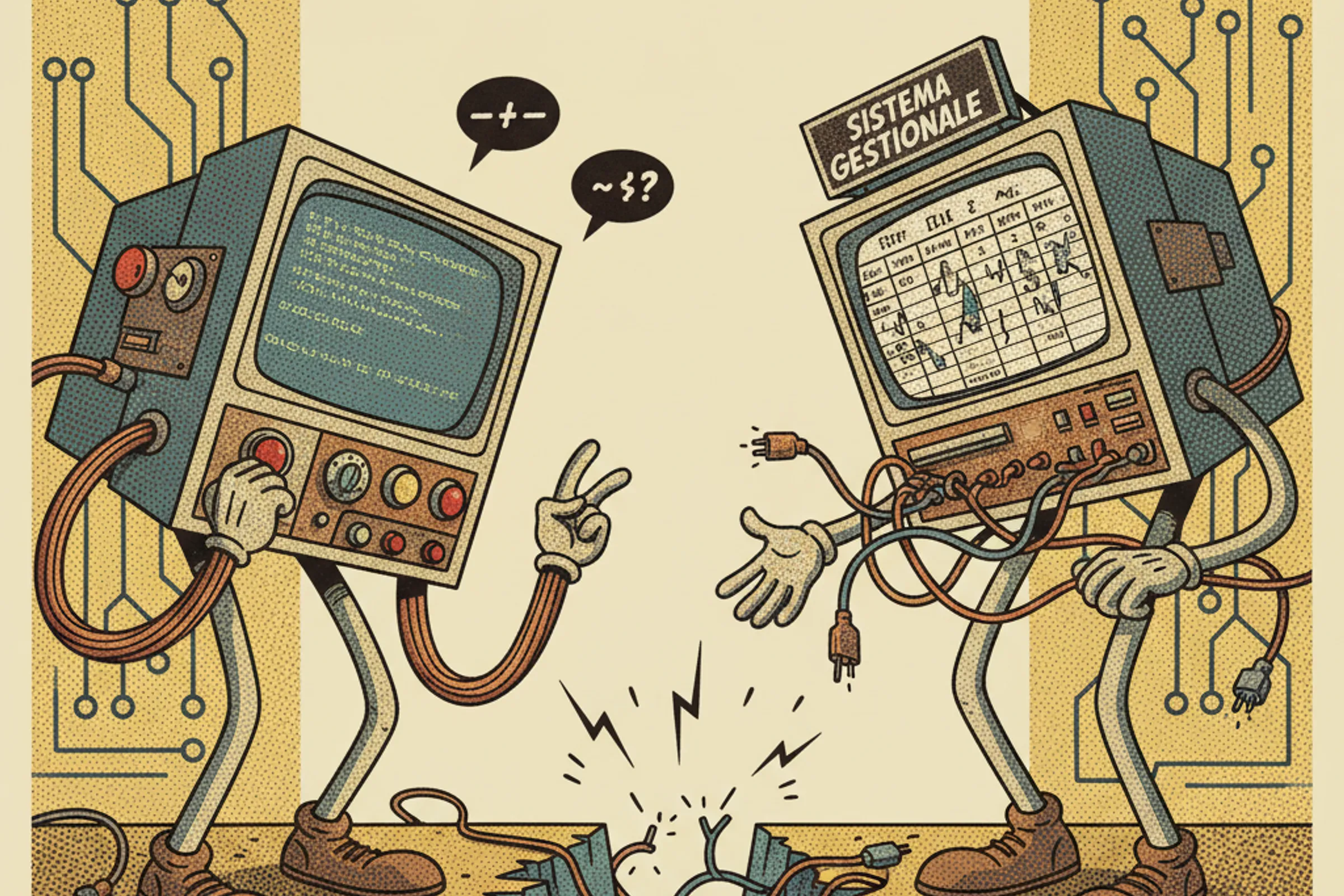
Key Takeaways
- # AI Agents Execute Complete Work Cycles Autonomously: Download Invoices from Cassetto Fiscale, Classify, Update ERP, and Generate Reports Without Human Intervention An AI agent autonomously executes complete work cycles: it downloads invoices from the cassetto fiscale (Italian tax document portal, your digital tax drawer at the Revenue Agency), classifies them, updates the ERP system, and generates reports without human intervention. In Italian business operations, this represents a fundamental shift from traditional automation to true autonomous execution. Unlike robotic process automation (RPA) that requires predefined rules and breaks when exceptions occur, AI agents make contextual decisions throughout multi-step workflows that span multiple Italian compliance systems. ## What Makes an AI Agent Different from Traditional Automation Traditional automation in Italian accounting follows rigid if-then logic. When a passive invoice arrives in your cassetto fiscale on the Agenzia delle Entrate (Italian Revenue Agency, equivalent to the IRS) portal, a standard automation might download it—but stops there when the document format changes or classification becomes ambiguous. An AI agent operates differently. It continuously monitors your cassetto fiscale, identifies new invoices, extracts data even from non-standard formats, determines the correct accounting classification based on your company's chart of accounts, verifies VAT treatment under Italian regulations, updates your gestionale (Italian ERP/accounting management system), and flags exceptions that require human review—all as a single autonomous cycle. This autonomous execution matters particularly for foreign companies operating in Italy. Italian compliance requires managing documents across fragmented systems: FatturaPA (Italy's mandatory B2B e-invoicing system) for active and passive invoices, cassetto fiscale for tax document storage, Sistema Tessera Sanitaria (Italian Healthcare Card System) for healthcare-related expense reporting, and your internal ERP. AI agents bridge these systems without requiring constant human orchestration. ## How AI Agents Execute Complete Work Cycles in Italian Accounting A complete work cycle in Italian accounting involves multiple decision points that previously required human judgment: **Document acquisition**: The AI agent authenticates to your cassetto fiscale, identifies new invoices since the last check, and downloads them with associated metadata. When the Agenzia delle Entrate changes portal structure or authentication requirements (which happens regularly), the agent adapts rather than breaking. **Intelligent classification**: Unlike rule-based systems that match exact text strings, the agent understands context. An invoice from "Telecom Italia" could be classified as telephone expenses, internet services, or mobile devices depending on the service description, previous patterns, and your company's accounting policies. The agent makes this determination autonomously. **Cross-system validation**: Before updating your gestionale, the agent verifies the supplier exists in your master data, checks that VAT treatment aligns with Italian requirements, confirms the invoice hasn't been duplicated, and validates that amounts reconcile with purchase orders if they exist. **Exception handling**: When the agent encounters ambiguity—perhaps a supplier that doesn't exist in your system or an unusual expense category—it doesn't stop the entire workflow. It processes what it can confirm, flags the exception with specific context for human review, and continues with remaining invoices. **Reporting and learning**: After processing, the agent generates summaries showing what was automated, what requires attention, and patterns it identified. Critically, it learns from human decisions on flagged exceptions, improving classification accuracy over time for your specific business. ## Practical Implications for Foreign Companies Operating in Italy For foreign companies, autonomous AI agents solve a persistent challenge: Italian compliance requires constant attention to multiple portals and deadlines, but hiring full-time staff for document processing is often economically inefficient for subsidiaries or branches. An AI agent provides continuous monitoring without proportional cost increases. Whether you process 50 invoices monthly or 5,000, the agent executes the same complete cycle. This matters particularly during Italian fiscal deadlines when document volumes spike—quarterly VAT filings (liquidazioni IVA trimestrali), annual tax returns (dichiarazioni dei redditi), or mandatory communications like the esterometro (cross-border transaction report, now integrated into FatturaPA) for international transactions. The autonomous nature also reduces dependency on specialized Italian accounting knowledge for routine processing. Your commercialista (Italian CPA and business advisor) can focus on advisory work and complex compliance rather than manually downloading, classifying, and entering invoices—tasks where their expertise adds minimal value but consumes significant time. ## When Human Expertise Remains Essential AI agents execute routine cycles autonomously, but Italian business operations still require human judgment for exceptions and strategic decisions. Complex supplier contracts with mixed VAT treatment, invoices requiring reverse charge (inversione contabile) verification under Italian and EU rules, first-time expense classifications for new business activities, reconciliation discrepancies that might indicate compliance issues—these scenarios need your commercialista's expertise. The agent's role is not replacement but leverage. By handling the 80% of invoices that follow standard patterns, it frees professional time for the 20% that genuinely require Italian regulatory expertise, contractual interpretation, or strategic tax planning. ## The Shift from Task Automation to Outcome Automation Traditional automation in Italian accounting automated individual tasks: extract this field, update that record, send this notification. You still orchestrated the overall process. AI agents automate outcomes: "Ensure all passive invoices from cassetto fiscale are classified and recorded in the gestionale within 24 hours of receipt." The agent determines the required tasks, executes them in appropriate sequence, handles variations, and achieves the outcome autonomously. This shift matters because Italian compliance is outcome-focused. The Agenzia delle Entrate doesn't care whether you manually processed invoices or used automation—they require accurate, timely recording of transactions and proper VAT treatment. AI agents deliver compliance outcomes rather than just automating compliance tasks. For foreign companies, this means reduced operational complexity. Instead of managing multiple automation scripts, monitoring for failures, and maintaining integration logic as Italian systems change, you define desired outcomes and the AI agent executes complete cycles to achieve them. The future of Italian accounting automation isn't faster data entry—it's autonomous agents that execute complete work cycles from document acquisition through reporting, allowing businesses to focus on growth while maintaining rigorous Italian compliance.
- # By 2027, 25% of Fortune 500 Companies Will Have at Least One Department Primarily Operated by AI Agents, According to Gartner
- McKinsey estimates that agentic automation can recover up to 40% of working time in administrative and financial functions in mid-sized companies.
- Goldman Sachs reports a 73% reduction in accounting reconciliation errors through autonomous AI workflows compared to manual processes.
- # Italian SMEs Need Four Core AI Agents: Document Management, Treasury, Compliance, and Reporting Italian small and medium-sized enterprises (SMEs) with annual revenue between €5 million and €20 million (~$5.4-21.6 million USD) primarily require four types of AI agents to manage their business operations effectively: document management agents, treasury agents, compliance agents, and reporting agents. ## Why These Four Agent Types Matter for Italian Mid-Market Companies In the Italian market, companies operating within this revenue range face a critical challenge: they've outgrown manual processes but lack the resources of large enterprises to implement comprehensive ERP systems. These businesses must manage complex Italian regulatory requirements—including FatturaPA (Italy's mandatory B2B e-invoicing system), monthly VAT reporting to the Agenzia delle Entrate (Italian Revenue Agency, equivalent to the IRS), and sector-specific compliance obligations—while maintaining operational efficiency. The four agent framework addresses this gap by automating the most resource-intensive and error-prone areas of Italian business administration: **Document Management Agents** handle the continuous flow of Italian tax-compliant documents, from processing incoming FatturaPA invoices to organizing communications with the commercialista (Italian CPA and business advisor) and maintaining the document retention required under Italian law. **Treasury Agents** monitor cash flow, payment cycles, and banking transactions—critical for Italian SMEs where payment terms often extend 60-90 days and maintaining liquidity requires constant oversight of customer payments and supplier obligations. **Compliance Agents** track regulatory deadlines, verify tax calculation accuracy, and ensure adherence to Italian corporate obligations such as those required under D.Lgs 231/2001 (Italian Corporate Criminal Liability Law) for companies of this size that often have compliance exposure but no dedicated compliance officer. **Reporting Agents** synthesize financial data into actionable insights for management, transform Italian accounting data into formats required by international parent companies or investors, and prepare documentation needed for interactions with Italian banks and tax authorities. For Italian SMEs in this revenue bracket, implementing these four specialized agents delivers immediate operational relief while building the foundation for scalable growth in Italy's complex regulatory environment.
- # AI Agent Integration with Italian ERP Systems Requires Functional APIs—The Primary Challenge for Italian SME Adoption The integration of AI agents with Italian gestionale systems (all-in-one business management software combining accounting, invoicing, inventory, and CRM) requires functional APIs, representing the primary challenge for adoption among Italian small and medium-sized enterprises (SMEs). ## Why Italian ERP Systems Present Unique Integration Challenges In Italy, most SMEs rely on gestionale software that evolved from standalone accounting packages rather than modern cloud-based platforms. Unlike enterprise systems common in US or UK markets, many Italian gestionali were designed for local compliance—particularly FatturaPA (Italy's mandatory B2B e-invoicing system) and communication with the Agenzia delle Entrate (Italian Revenue Agency, equivalent to the IRS)—rather than third-party integration capabilities. This creates a fundamental obstacle: **AI agents cannot access data or automate processes without working APIs**. Many legacy Italian business management systems either lack APIs entirely or provide limited, poorly documented interfaces that make reliable automation nearly impossible. ## The API Gap in Italian SME Software The typical Italian SME uses gestionale software from providers like TeamSystem, Zucchetti, or Passepartout. These systems excel at Italian regulatory compliance but often lag in technical architecture. Specifically: - **No standardized API protocols**: Each vendor implements proprietary integration methods, requiring custom development for each system - **Limited data access**: APIs may expose invoicing data for FatturaPA compliance but restrict access to inventory, customer records, or analytical data - **Authentication complexity**: Integration often requires navigating multiple authorization layers designed for commercialisti (Italian CPAs and business advisors) rather than automated systems - **Documentation barriers**: Technical documentation frequently exists only in Italian and assumes familiarity with Italian accounting conventions For foreign companies operating Italian subsidiaries, this creates a double challenge: understanding both the Italian regulatory context and the technical limitations of locally-required software systems. ## What This Means for AI Adoption in Italian Business Operations AI agents promise significant efficiency gains—automated invoice processing, predictive cash flow analysis, compliance monitoring—but these capabilities depend entirely on data access. In the Italian market, the gestionale is the single source of truth for business operations, making API access non-negotiable. **Without functional APIs, Italian SMEs face three options:** 1. **Manual data export**: Employees download reports and upload them to AI tools, eliminating automation benefits and introducing error risk 2. **System replacement**: Migrate to modern cloud-based alternatives—a costly, disruptive process requiring commercialista involvement and staff retraining 3. **Custom integration development**: Build proprietary connectors, feasible only for larger organizations with dedicated IT resources None of these approaches delivers the plug-and-play AI adoption common in other markets, explaining why Italian SME digital transformation lags behind European averages despite high awareness of AI potential. ## How Modern Platforms Address the Italian Integration Challenge Platforms like Mentally.ai specifically address this Italian market reality by building pre-configured integrations with the most widely-used Italian gestionale systems. Rather than requiring SMEs to change their core business software, these solutions create the missing API layer—translating between legacy Italian systems and modern AI capabilities. This approach recognizes a fundamental truth about the Italian market: **businesses will not abandon gestionale systems that ensure compliance with Agenzia delle Entrate requirements**, regardless of AI benefits. Successful Italian AI adoption therefore requires solutions that adapt to existing infrastructure rather than demanding wholesale replacement. ## The Path Forward for Foreign Companies and Their Italian Operations For international businesses managing Italian subsidiaries or establishing Italian operations, understanding the gestionale ecosystem is essential. When evaluating AI automation for Italian entities, the critical question is not "What can this AI do?" but rather "**Can this AI actually connect to our Italian business management system?**" Foreign companies should specifically verify: - **Native integrations** with the gestionale software their Italian commercialista recommends or they currently use - **Data coverage** extending beyond invoicing to include Prima Nota (Italian general ledger entries), inventory, and customer relationship data - **Compliance awareness** ensuring AI processes respect Italian data localization requirements and fiscal documentation rules - **Support for Italian workflows** including multi-step approval processes common in Italian accounting practices The API challenge represents more than a technical obstacle—it reflects the broader reality that Italian business digitalization requires solutions purpose-built for Italian regulatory and technological context, not simply localized versions of international platforms. **For foreign companies navigating Italian operations, partnering with technology providers who understand both Italian compliance requirements and the practical limitations of Italian SME software infrastructure makes the difference between theoretical AI capabilities and actual operational transformation.**
- # Independent AI Research Reveals Integration Gap in Italian Business Software Market Three independent AI research studies conducted on GitHub, Stack Overflow, and Italian developer forums have analyzed the actual availability of integrations between AI agents and gestionale software (Italian ERP/business management systems) in the Italian market.
Summary
# AI Agents and Italian SMEs: The Critical API Gap Between Global Promise and Local Reality AI agents are autonomous systems that read data from external sources, reason about it, and execute actions automatically—fundamentally different from simple chatbots. In the context of Italian SMEs (small and medium enterprises) with revenue between €5 million and €20 million (~$5.4-21.6 million USD), the most relevant agents include document agents for invoices and contracts, treasury agents for cash flow monitoring, compliance agents for fiscal deadlines, and reporting agents for automatic report generation. According to Gartner, by 2027, 25% of Fortune 500 companies will have at least one department operated primarily by AI agents. McKinsey estimates that agentic automation can recover up to 40% of working time in administrative and financial functions within mid-sized companies, while Goldman Sachs reports a 73% reduction in accounting reconciliation errors. However, implementation in Italy faces a critical challenge: AI agents require APIs (Application Programming Interfaces) to communicate with company management software. Three independent AI research efforts conducted on verifiable sources including GitHub, Stack Overflow, and Italian developer forums have revealed the reality of integration between AI agents and management software used by Italian SMEs, highlighting a significant gap between global technological promise and actual availability of compatible infrastructure in the Italian market.
Is Your SME Ready for AI Employees? Three AI Research Studies Reveal the Italian Reality
Editorial Note — Read Before the Article
This article is the result of three independent AI research studies conducted by Claude (Anthropic Inc.) and advanced search engines on publicly verifiable sources: GitHub, Stack Overflow, Reddit, Italian developer forums, official ERP documentation, and integration marketplaces. The software and company names cited in the text are exclusively those that appeared in the research, not an editorial evaluation by this site. For each nominal citation, a reference to the Data Appendix at the end of the article is provided.
As with any AI-based research, significant methodological limitations exist, which are explicitly discussed in the Disclaimer section at the end of this text.
The Moment When Everything Changes
The promise comes from McKinsey, from Gartner, from the stages of Davos and from the tech podcasts you listen to in the car. **AI agents**, they say, are the new digital employees: they work twenty-four hours a day, don’t take vacations, don’t ask for raises, don’t get sick. An American logistics company replaced thirty data entry operators with three AI agents. A London software house automates the entire client onboarding cycle without human intervention. There’s talk of epochal transformation, democratization of intelligence, SMEs that can finally compete with multinationals.
It’s real. It’s not science fiction. AI agents exist and they work.
But then comes the question that none of the speakers on stage ever answer: and in Italy, concretely, how does it work?
The answer is more complicated than AI vendors admit. And more interesting than technology change critics want you to believe.
What AI Agents Really Are
Before diving into the Italian reality, it’s worth understanding what we’re talking about when we say “AI agent.” An agent is not a chatbot. It’s not an auto-complete function. It’s not a bot that responds to emails with preset texts.
An AI agent is a system that reads data from external sources, reasons about it, decides on an action, and executes it autonomously, potentially writing results to other systems. An accounting agent, to give a concrete example: every night it downloads incoming invoices from the cassetto fiscale (Italian tax digital drawer for invoice storage), classifies them by cost center, updates the ERP system, and sends you a summary at 7:15 AM with anomalies to verify. It doesn’t wake you up to tell you what it’s done. It’s already done it.
A cash flow agent monitors bank movements in real-time, cross-references PA (Italian Public Administration) payment deadlines, interprets the historical delays of your clients, and alerts you three weeks in advance when liquidity risks dropping below the critical threshold. Not after. Before.
A margin analysis agent (which platforms like Mentally already know how to build for Italian SMEs) examines invoices from the last six months, identifies products sold below cost after raw material price increases, and tells you: “this client you think is profitable is actually costing you €15,000 per year.” Your Excel never told you this because the data was aggregated. The agent sees it line by line.
The technology works. The problem, as we’ll see, is upstream.
Why They’re Extraordinary: The Real Promise
To understand what’s happening in the world, some data helps focus the dimension of change.
According to Gartner, by 2027, 25% of Fortune 500 companies will have at least one department operated predominantly by AI agents. Not “supported.” Operated. McKinsey estimates that agentic automation can recover up to 40% of working time in administrative and financial functions in medium-sized enterprises. Goldman Sachs has published data indicating that adoption of autonomous AI workflows reduces accounting reconciliation errors by 73% compared to manual processes.
In the context of an Italian SME with revenue between €5M and €20M (~$5.4M-$21.8M USD), the most relevant AI agents are typically four: a document agent (invoice management, delivery notes, contracts), a treasury agent (cash flow monitoring, liquidity alerts, 90-day forecasts), a compliance agent (tax deadlines, adeguati assetti (adequate organizational arrangements per Italian Corporate Code), CNDCEC (Italian National Council of Accountants) alerts), and a reporting agent (report generation for board, bank, commercialista (Italian CPA and business advisor) in real-time rather than quarterly).
Someone is already building these agents for the Italian market. But to do so, they must solve a problem that no one ever explains in presentations: AI agents need to talk with the ERP system. And to talk with the ERP system, you need APIs.
The Plot Twist: What Three AI Research Studies Found
The Methodology (and Why It Matters)
When we asked ourselves “how realistic is AI agent integration with Italian ERP systems?”, we conducted three independent AI research studies. We didn’t ask the vendors. We asked publicly available, verifiable sources, unfiltered by anyone’s marketing department.
The sources used: GitHub (public repositories), Stack Overflow (developer questions), Reddit (international communities r/ERP, r/ItalyInformatica), Italian developer forums (forum.html.it), official public documentation, integration marketplaces (Zapier, Make.com, n8n).
But before presenting the results, it’s necessary to do something that few do: declare the biases of these research studies themselves.
A Necessary Honesty: The Biases of the Sources
Vendor source bias (marketing): The information that software producers publish on their own sites naturally describes their own capabilities optimally. Terms like “complete API,” “bidirectional integration,” “open ecosystem” appear in almost all commercial materials. These data are strongly marketing-oriented and cannot be assumed as an objective measurement of real capabilities. In the next section we’ll show the difference between what vendors declare and what independent sources show.
Public source bias (Stack Overflow, GitHub): Global development platforms are predominantly Anglophone and American. The Italian ERP ecosystem is historically more closed, often operates in Italian, and Italian developer communities don’t have the same density of public online presence compared to their American or Northern European colleagues. It’s concretely possible that integrations exist, that Italian developers have solved integration problems, but that they’ve done so in non-indexed channels by American search engines: private communities, internal forums, certified partner networks, WhatsApp Business communications between technical firms.
Cultural and structural bias: Italian entrepreneurial culture historically tends toward confidentiality. A company that has developed an effective integration rarely publishes it on GitHub to share with the community. This “hidden path” is real and not captured by public research. It’s a caveat to keep in mind when reading the data that follows.
The anti-bias test on the question: During one of the three research studies, we explicitly posed this question to the AI system: “Does the formulation of our research question introduce a bias in the results you’re producing?” The answer was articulated: the system recognized that searching for “barriers to AI integration with Italian ERPs” could orient results toward collecting negative evidence, but indicated that the collected data (absence of public repositories, absence of Stack Overflow questions, partner-lock pattern documented in the vendors’ own official communications) are objectively verifiable facts and not subjective interpretations of the research. The system nevertheless recommended integrating the data with direct vendor sources and with qualitative field interviews, which we also note explicitly here.
Silence as Statistical Data
The most significant discovery of the three research studies is not a positive or negative datum. It’s an absence.
On six major Italian ERP systems (cited by Google/Anthropic Inc. research — see Appendix A), serving hundreds of thousands of Italian companies: zero questions found on Stack Overflow — not “few,” zero — on none of the six systems. For comparison, Odoo generates over 37,000 questions, Microsoft Business Central between 3,000 and 5,000, SAP Business One between 1,500 and 2,000.
On GitHub, the only significant repository found for an Italian ERP belongs to a single employee of one of the companies involved and has zero stars after 84 commits. The international comparison: ERPNext has 31,900 stars, Odoo 37,000+.
On Reddit, searches in r/ItalyInformatica, r/ERP, r/Italy: zero threads on Italian ERP APIs. No complaints. No discussions. No requests for help. Nothing.
On X.com/Twitter, after 16+ distinct queries in Italian and English: zero relevant tweets on Italian ERP developer experience.
Silence, in this context, is itself a datum. When a product category is used by hundreds of thousands of companies but generates zero public discussions among developers, it means one of these things: either everything works perfectly without need for help (optimistic but improbable hypothesis), or the integration ecosystem is structurally closed and the problem is handled in private and commercial channels that aren’t visible.
The Italian ERP Labyrinth: Marketing Data vs. Verifiable Data
The Table That No One Publishes
The research produced a systematic comparison between the marketing claims of ERP vendors and publicly verifiable evidence. Note that vendors have every right to communicate their capabilities favorably. What follows is not a judgment on the merit of the products — which may be excellent for their intended uses — but a measurement of the public availability of the API ecosystem for third-party developers.
| System (¹) | Marketing Claim | Publicly Verifiable Evidence | Gap |
|---|---|---|---|
| TeamSystem Enterprise (¹) | “Complete API ecosystem with SDK” | Real documentation portal, OpenAPI 3.1. Zero GitHub repositories for third-party integrations. Zero Stack Overflow. | Moderate — documentation exists, external adoption no |
| Fluentis (¹) | “REST WebApi integration platform” | Verified public REST documentation. Zero community. Zero external validation. | Moderate — transparent but no ecosystem |
| MagoCloud (Zucchetti/Microarea) (¹) | “Industry-standard REST API” | GitHub samples from 1 employee. No developer portal. Partner-gated access. | Significant — real API, closed access |
| Passepartout Mexal (¹) | “API integrations guarantee continuity” | Real REST WebAPI, but 403 documentation (public access denied). Italian only. Requires MDS license. | Significant — real but blocked |
| eSOLVER (Sistemi S.p.A.) (¹) | “Prepared for API integrations” | Zero evidence of any public API. No portal, no repo, no documentation. | Total — claim not verifiable |
| Zucchetti Ad Hoc (¹) | “Interfaceable via API with external applications” | Zero native API documentation. All integrations via third-party commercial middleware. | Total — claim not verifiable |
(¹) All names cited are those that emerged from Google/Anthropic Inc. research — see Appendix A for complete sources.
Comparison with International Benchmark
To contextualize the data, the research measured the same indicators for major international ERPs available on the market. The comparison is not editorial: it’s based on the same public metrics (Stack Overflow, GitHub, public documentation).
::chart[developer_score_erp_italiano_vs_internazionale_sca]
::chart[domande_stack_overflow_per_erp_il_divario_di_ecosi]
The Partner-Lock Model: Not a Bug, a Feature
The research highlights a structural pattern: Italian ERP vendors don’t treat APIs as an open platform for developers but as a commercial service distributed through certified partner networks. This isn’t necessarily wrong as a business choice — many global software companies adopt similar models. But it has a direct consequence for those wanting to integrate AI agents: you can’t simply “download the SDK, read the documentation, and start.” You must sign commercial agreements with certified partners, pay development licenses, and depend on third-party timelines and availability.
The most indicative datum: none of the six analyzed Italian ERPs has native connectors on Zapier, Make.com, or n8n — the three main global integration marketplaces, with millions of users and thousands of available connectors. Presence on these platforms has become a de facto standard for measuring a software ecosystem’s openness. The absence is significant.
::chart[presenza_su_piattaforme_di_integrazione_globali_za]
The Technical Barrier: What an API Is and Why It Changes Everything
The Phone Number Analogy
To understand why an ERP system’s API ecosystem determines the possibility of integrating AI agents, it’s useful to use a simple analogy.
Imagine your IT systems are offices. Your ERP system is the accounting office. The AI agent is a new employee hired to manage automatic reconciliation. For this employee to do their job, they need to talk with the accounting office: ask questions, receive answers, write data, read records.
An API is exactly the phone number of that accounting office. It’s the standardized protocol through which two IT systems exchange information in a structured way. Without a working phone number, the new employee can sit in front of the accounting office all day, but won’t be able to do anything: the door is closed, no one answers, there’s no formal way to interact.
An open and documented API is equivalent to a public phone number, with an operator who answers, an understandable voice menu, and clear procedures. A system without APIs, or with APIs only for certified partners, is equivalent to a secret number that only works if you already have the access code, know someone inside, and have signed a commercial agreement before you can even dial the first digits.
AI agents, to function, must make hundreds of “calls” to the ERP system every day. Read an invoice, write a classification, update a payment status, query an account balance. Without a robust, bidirectional, real-time API, these operations are not possible.
The Three Concrete Barriers
Barrier 1 — Absent or closed APIs. If your ERP system doesn’t expose public APIs, or only exposes them to certified partners, the AI agent can’t interact with your data in real-time. It can at most read manually exported files — which isn’t automation, it’s simply processing CSV exports, with all the risk of obsolete data and manual processes that follows.
Barrier 2 — No test sandbox. To develop and test an AI agent that interacts with your ERP system, you need a test environment (sandbox) that simulates the real system without touching production data. The research shows that none of the six analyzed Italian ERPs offers public, self-service sandboxes for external developers. This means every test must be done on the real environment, with all the risks that entails, or requires the creation of separate environments with significant costs.
Barrier 3 — Hidden integration costs. When an ERP vendor states “we’re integrable via API,” the implicit cost is rarely communicated. Research on the technical architecture of Italian systems shows that the real costs of integration to connect an AI agent to a legacy ERP include: partner licenses (variable, not public), proprietary middleware development (€5,000–€30,000 (~$5,400-$32,700 USD) initial investment), ongoing maintenance as ERP software changes (€1,500–€5,000/year (~$1,600-$5,400 USD/year)), and managing compatibility breaks with each system update.
How to Navigate Today: The Path That Works
Practical paths exist, and in Italy they’ve already been traveled by those who’ve had the patience and technical experience to build them.
The most effective strategy is not to replace the ERP system — it’s to build an intelligence layer above the data sources already available via public API. And in Italy, publicly accessible data sources via API exist and are robust: the Agenzia delle Entrate (Italian Revenue Agency, equivalent to IRS) cassetto fiscale (Italian tax digital drawer), the SDI (Sistema di Interscambio, Italy’s mandatory B2B e-invoicing exchange system) electronic invoicing system (via middleware like A-Cube API, Invoicetronic, Openapi.it), banking data via Open Banking PSD2, the PCC platform (Piattaforma Certificazione Crediti, Italian Public Administration Credit Certification Platform) for monitoring PA credits. These sources, combined, cover 80% of the information necessary for a treasury, cash flow, and compliance agent.
The ERP system is integrated where possible — in cases where ERPs offer access, even through scheduled exports or certified middleware — and bypassed where necessary, building business logic on public API architecture.
This is the work Mentally has done over four years: building the connection layers between truly accessible Italian data sources and AI intelligence. Not the theoretical promise. The system that’s already running on Italian SMEs today.
The Next Step
If you’re evaluating the adoption of AI agents in your SME, the right question isn’t “which AI agent do I buy?” The question is: “what are the accessible data sources in my infrastructure, and what intelligence layer can I build on top of them?”
We have four years of experience navigating this labyrinth. We build custom AI agents for Italian SMEs, starting from truly available and integrable data sources.
→ Talk to us about AI agents for your company
If you want instead to immediately start using AI intelligence on data already available in your cassetto fiscale and electronic invoices, Mentally Copilot is operational from tomorrow: try €1 for 15 days.
DISCLAIMER AND METHODOLOGICAL LIMITATIONS
Read this far? This section is as important as the main text.
Nature of This Article
This text is an informational article based on AI research conducted on publicly verifiable sources. It is not a professional audit report, it is not certified technical consulting, and it does not constitute legal or commercial evaluation of any of the cited software. The named companies have every right to present their capabilities favorably in their own marketing materials.
Limitations of AI Research
The AI systems that conducted the research have structural limitations relevant to this type of analysis:
Time window: The available information may not reflect recent product updates. An ERP vendor may have released new APIs after the research date. AI systems may have temporal biases in their knowledge bases.
Attention bias problem: Large language models tend to give greater weight to sources most frequently cited online. If a product is less cited not because it’s worse, but because its market is more closed or less online, the model might systematically underestimate its capabilities.
Anglophone bias of search engines: GitHub, Stack Overflow, Reddit, X.com are platforms born and grown in American and Anglophone contexts. The Italian developer community operates partly in channels not indexed by these platforms: private forums, company Slack communities, local partner networks, direct communications between technical firms. It’s concretely possible that effective integrations exist in this “submerged” ecosystem and aren’t captured by the research.
Question bias: As stated in the main text, one of the three research studies explicitly tested whether the question formulation (“barriers to AI integration with Italian ERPs”) created bias in the results. The system responded that the collected data (verifiable absence of repositories, questions, communities) are objective facts, but correctly recommended integrating with direct qualitative sources and with the vendors themselves before making purchasing or investment decisions.
Inability to access private partner ecosystems: The certified partner networks of Italian ERPs operate in private document environments (partner portals, NDA contracts, restricted-access documentation). AI research cannot access these environments. Real integration capabilities could be significantly different from what emerges from public sources.
This Is Not Comparative Advertising
The data reported in this article do not constitute comparative advertising under Italian D.Lgs. 145/2007 (Italian Legislative Decree implementing EU Directive on comparative advertising). It is not claimed that any of the cited products is better or worse than another. The public availability of API ecosystems based on verifiable and public metrics is documented, with explicit declaration of their methodological limitations.
APPENDIX A — RAW AI RESEARCH DATA
This appendix reports the main evidence found in the three AI research studies on public sources. Each datum is attributed to the original source. Company names appear exclusively as they emerged from research on public sources.
A1 — Developer Ecosystem Metrics for ERPs
TeamSystem Enterprise (source: tse.docs.teamsystem.cloud, GitHub, Stack Overflow — Anthropic/Google research, February 2026)
- Documentation portal: present at tse.docs.teamsystem.cloud
- API standard: OpenAPI 3.1 (Smart Services) — verified
- Current documentation version: 2025.003.020 / beta 2026.001.000
- Third-party integration GitHub repositories: 0 verified
- Stack Overflow questions: 0 (English and Italian)
- File-based Python library pre-API found: pyIMPPN (indicates file integration was norm until recently)
- Notes: Only Italian ERP with professional developer portal. External community adoption not measurable.
Fluentis (source: docs.fluentis.com, GitHub, Stack Overflow — Anthropic/Google research, February 2026)
- Public documentation: present at docs.fluentis.com/Integration/
- API standard: REST with Basic Authentication (below 2026 OAuth 2.0 standard)
- Integrated middleware: BizLink (internal ESB)
- GitHub repositories: 0
- Stack Overflow questions: 0
- Notes: Most transparent public documentation among Italian ERPs. External community zero.
MagoCloud (Zucchetti/Microarea) (source: github.com/Microarea, Anthropic/Google research, February 2026)
- GitHub repositories: 21 public repos (Microarea organization), including mago-cloud-api
- Main repository stars: 0 stars, 1 fork after 84 commits
- Commit author: single Microarea employee (andrea-rinaldi-microarea)
- Public developer portal: absent
- Development tools: MyMago Studio (requires partner SharePoint access)
- API documentation: partner-gated
- Stack Overflow questions: 0
Passepartout Mexal (source: partial public documentation, Anthropic/Google research, February 2026)
- REST WebAPI: confirmed existing (GET, POST, PUT, DELETE)
- PDF documentation: HTTP 403 (access denied) on public access
- Documentation portal: edupass.it (partner-only)
- Development license: MDS (Mexal Developer Suite) — requires purchase through partner
- Legacy integration language: Sprix/Collage (proprietary BASIC) + Shaker (TCP/IP sockets)
- Documentation language: Italian only
- Stack Overflow questions: 0
eSOLVER (Sistemi S.p.A.) (source: partner sites, Anthropic/Google research, February 2026)
- Developer portal: absent
- Public API documentation: absent
- GitHub repositories: 0
- Stack Overflow questions: 0
- Integration available through: certified partners (GOALS Srl, DATASOFT Srl) or Commercient SYNC middleware
- Declaration found: “ERP prepared for API integrations” (source: partner materials)
- Verifiable technical evidence: none found
Zucchetti Ad Hoc (source: integration marketplace, partner sites, Anthropic/Google research, February 2026)
- Developer portal: absent
- Public native API documentation: absent
- GitHub repositories: 0 (note: the “zucchetti” topic on GitHub is dominated by Zucchetti Centro Sistemi, unrelated company — solar inverters)
- Declared installations: 13,000+
- Integration available through: AdHoc2Cart (100+ e-commerce platforms), bindCommerce, certified partners
- Declaration found: “interfaceable via API with external applications” (source: marketing materials)
- Verifiable technical evidence: none direct, only third-party middleware
A2 — International Benchmark (Same Metrics)
Microsoft Business Central (source: Microsoft Learn, Stack Overflow, GitHub)
- API standard: 54+ standard REST APIs, OAuth 2.0 Azure AD, OData V4
- Features: complete CRUD, transactional batches, webhooks, OpenAPI spec
- Sandbox: available self-service
- Stack Overflow questions: 3,000–5,000 (research estimate)
- Estimated Developer Score: 3.5/5
ERPNext (open source) (source: GitHub, Stack Overflow, community)
- API standard: auto-generated REST for all 700+ document types
- GitHub stars: 31,900
- Community: vibrant, contributions from 1,000+ global developers
- Stack Overflow questions: thousands
- Estimated Developer Score: 3.5/5
SAP Business One (source: SAP Developer Center, Stack Overflow)
- API standard: OData V4 Service Layer
- Stack Overflow questions: 1,500–2,000
- Community SDKs: present, created by third parties
- Estimated Developer Score: 2.5/5
A3 — Presence on Global Integration Marketplaces
Verification on Zapier, Make.com, n8n (February 2026):
| System | Zapier | Make.com | n8n |
|---|---|---|---|
| Odoo | ✅ Native | ✅ Native | ✅ Native |
| ERPNext | ✅ Native | ✅ Native | ✅ Native |
| Microsoft Business Central | ✅ Native | ✅ Native | ✅ Native |
| QuickBooks Online | ✅ Native | ✅ Native | ✅ Native |
| TeamSystem Enterprise | ❌ | ❌ | ❌ |
| Fluentis | ❌ | ❌ | ❌ |
| MagoCloud | ❌ | ❌ | ❌ |
| Passepartout Mexal | ❌ | ❌ | ❌ |
| eSOLVER | ❌ | ❌ | ❌ |
| Zucchetti Ad Hoc | ❌ bindCommerce Middleware | ❌ | ❌ |
Note: bindCommerce, Italian integration middleware, is present on some international marketplaces as an intermediary, but does not constitute a native connector of the ERPs themselves.
A4 — Usable Italian Public API Ecosystem
This section reports Italian data sources with functioning public API identified by the research, which constitute the base on which AI agents can be built independently of the ERP system:
SDI / Electronic Invoicing (FatturaPA system):
- A-Cube API (acubeapi.com): REST API, JSON → XML FatturaPA (Italy’s mandatory B2B e-invoicing format), webhook status, digital preservation
- Invoicetronic (invoicetronic.com): REST API, open source SDKs (Python, Node, Go, PHP), pre-flight validation
- Openapi.it: multiple microservices, active and passive cycle management, Split Payment validation
Cassetto Fiscale (Italian Tax Digital Drawer) / Agenzia delle Entrate:
- Access via SDI destination code (one-time delegation)
- Automatic scheduling possible via middleware API
Banking / F24 (Italian unified tax payment form):
- Fabrick (docs.fabrick.com): REST API for creation, validation and execution of F24 — verified endpoint: POST /api/gbs/banking/v4.0/accounts/{accountId}/payments/f24/orders
- Finom: Fabrick BaaS integration for SMEs
PA Data / Credits:
- PCC (Piattaforma Certificazione Crediti, Italian Public Administration Credit Certification Platform): access for monitoring credits toward PA
- api.gov.it: Italian Public Administration API Catalog (access limited to PA entities for many functions)
End of Appendix A
Last research update: February 2026. To report obsolete or inaccurate data: [editorial contact]
Data and Statistics
25%
40%
73%
30→3
€5M-€20M
90 giorni
€15.000
24/7
Frequently Asked Questions
- ### When Will Companies Massively Adopt AI Agents? In the rapidly evolving landscape of business, the adoption of AI agents is becoming increasingly critical. Companies around the world are exploring the use of artificial intelligence to streamline operations, enhance customer service, and improve decision-making processes. But when can we expect this adoption to become mainstream? ### What Factors Drive the Adoption of AI Agents? The timeline for widespread adoption of AI agents within companies hinges on several key factors: 1. **Technological Advancements**: As AI technology continues to evolve, companies will find more sophisticated and accessible tools. The improvement in natural language processing and machine learning will enable AI agents to handle complex tasks and interactions effectively. 2. **Cost Efficiency**: Organizations are continually looking for ways to reduce operational costs. AI agents can automate routine tasks, which can lead to significant savings. The lower the barrier to entry in terms of cost, the quicker companies will adopt these technologies. 3. **Market Demand**: As consumers become accustomed to interaction with AI through chatbots and virtual assistants, businesses will be pressured to adopt similar technologies to meet customer expectations. This demand will drive the development and integration of AI agents. ### What Are the Implications of AI Agent Adoption? The implications of adopting AI agents are far-reaching: - **Enhanced Productivity**: AI agents can handle multiple customer inquiries simultaneously, thereby improving response times and allowing human employees to focus on more complex issues. - **Operational Scalability**: Companies can scale their customer service operations without a proportional increase in human resources. This can be particularly beneficial for businesses experiencing rapid growth. - **Data-Driven Insights**: AI agents can analyze large volumes of data to provide actionable insights and forecasts, enabling better strategic decision-making for organizations. ### How Will the Italian Market Respond? In Italy, the landscape for AI adoption has its unique challenges and opportunities. Italian companies are generally conservative in adopting new technologies. However, recent trends indicate a growing interest in AI solutions, particularly in sectors such as manufacturing, finance, and customer service. ### When Should Companies Consider Engaging Italian Professional Services? For foreign companies looking to operate in Italy, understanding the regulatory landscape is crucial, especially as they explore AI integration. Engaging a **commercialista** (Italian CPA and business advisor) can help navigate compliance requirements and local market conditions. #### Key Considerations for Engagement: - **Understanding D.Lgs 231/2002**: Companies must ensure compliance with the Italian Corporate Criminal Liability Law, which may encompass responsibilities related to AI use. - **Avoiding Bureaucratic Pitfalls**: Italy’s regulatory framework can be complex. A local expert can provide insights into minimizing bureaucratic obstacles. - **Customization of Solutions**: A commercialista can assist in tailoring AI solutions to fit the specific needs of the Italian market. ### Conclusion: A Future with AI As we look ahead, it's clear that the massive adoption of AI agents by companies is not a question of if, but rather when. With continual advancements in technology and increasing market demand, we anticipate that the next few years will see a significant shift towards AI integration across various sectors. For foreign companies operating in Italy, understanding this transition will be vital to remain competitive and compliant in a digital economy. **Call to Action**: If you're considering how AI can enhance your business operations in Italy, now is the time to reach out to a professional advisor. Exploring the potential of AI in your operations could be your next strategic move.
- According to Gartner, by 2027, 25% of Fortune 500 companies will have at least one department primarily operated by AI agents. This means entire departments will function mainly through agent-driven automation, not just being supported but effectively managed by AI agents. The timeline indicates a rapid transformation over the next three years, at least for large international organizations. For Italian SMEs (small and medium-sized enterprises), the pathway may differ due to the specificities of the national software ecosystem.
- ### What Are the Main AI Tools Useful for Italian SMEs? Artificial intelligence (AI) is quickly becoming an invaluable asset for small and medium-sized enterprises (SMEs) in Italy. By leveraging AI technologies, Italian businesses can streamline operations, enhance customer experiences, and make data-driven decisions. Below are some of the key AI tools that are particularly beneficial for Italian SMEs: #### 1. Customer Service Automation **Chatbots and Virtual Assistants** AI-driven chatbots, such as those powered by natural language processing (NLP), can handle customer inquiries, provide instant support, and assist with order processing. This reduces the load on human agents and ensures 24/7 customer service availability. For example, a local Italian restaurant can use a chatbot to take reservations and answer questions about the menu, improving customer engagement and satisfaction. #### 2. Predictive Analytics **Data Analysis Tools** Predictive analytics tools utilize machine learning algorithms to analyze historical data and forecast trends. For Italian SMEs, this can inform inventory management, sales forecasts, and market trends. A retail store could use predictive analytics to determine which products will be in demand during specific seasons, minimizing overstock and maximizing profit. #### 3. Marketing Automation **Personalization Engines** AI-driven marketing automation tools can optimize campaigns by personalizing content based on customer preferences. For example, a fashion retailer can use these tools to recommend outfits tailored to individual customer styles, increasing conversion rates and customer loyalty. #### 4. Accounting and Financial Management **AI-Powered Financial Platforms** AI tools can assist with bookkeeping, invoicing, and financial reporting. Platforms like Mentally.ai automate repetitive accounting tasks, allowing business owners to focus on growth strategies instead. In Italy, adhering to FatturaPA (Italy's mandatory B2B e-invoicing system) is made easier through such platforms, ensuring compliance and accuracy in financial reporting. #### 5. Human Resources Optimization **AI Recruitment Tools** AI recruitment tools can streamline the hiring process by analyzing resumes and identifying the best candidates. For SMEs in Italy, this means faster and more efficient recruitment cycles. By employing AI-driven solutions, companies can reduce bias and enhance diversity in hiring practices. ### Conclusion Adopting AI tools can provide significant competitive advantages for Italian SMEs. By automating customer service, improving marketing strategies, and enhancing financial management, businesses can drive efficiency and growth. To fully capitalize on these innovations, it may be beneficial for foreign companies to consider hiring an Italian commercialista (Italian CPA and business advisor) to navigate local regulations and maximize the potential of AI technologies. #### Call to Action Interested in integrating AI into your Italian SME? Contact us today to learn how we can assist you in implementing these transformative technologies while ensuring compliance with Italian regulations.
- For an Italian SME (small and medium-sized enterprise) with a turnover between €5 million (~$5.4 million USD) and €20 million (~$21.6 million USD), the four most relevant AI agents are: the document agent for managing invoices, delivery notes (DDT), and contracts; the treasury agent for monitoring cash flows, liquid asset alerts, and 90-day forecasts; the compliance agent for tax deadline management and adequate organizational arrangements (adeguati assetti, per Italian Corporate Code); and the reporting agent for automatic report generation for the board of directors (CdA), banks, and the commercialista (Italian CPA and business advisor) in real time instead of quarterly. These agents can automate up to 40% of working time in administrative and financial functions, according to estimates from McKinsey.
- ## Are AI Research and Italian Management Software Reliable? In Italy, the integration of AI in management software has rapidly evolved, prompting many businesses to question the reliability of these AI-driven systems. This is critical for foreign companies looking to operate effectively within the Italian market. Understanding the accuracy and dependability of AI research in this context is essential for informed decision-making. ### What is the Current Landscape of AI in Management Software? AI applications in management software, including accounting, resource planning, and inventory management, utilize machine learning algorithms to enhance decision-making processes. These systems can analyze data at unprecedented speeds, allowing Italian businesses to optimize their operations. However, the effectiveness of these technologies greatly relies on the data they process and the algorithms used. ### How Reliable is AI Research in Italian Software? The reliability of AI research in Italian management software is contingent upon several factors: 1. **Data Quality**: AI systems are only as good as the data they utilize. Reliable, comprehensive, and accurate data is critical for effective learning and performance. 2. **Algorithm Transparency**: Open and transparent algorithms allow for better understanding and trust in AI systems. Italian firms are encouraged to scrutinize vendors on this aspect. 3. **Regulatory Compliance**: Adherence to regulations, such as the GDPR, ensures that AI applications operate within legal frameworks, contributing to their reliability. 4. **User Feedback**: Continuous improvement through user feedback can significantly enhance AI systems, making their outputs more reliable over time. ### What Are the Implications for Foreign Companies? For foreign companies operating in Italy, the reliability of AI management software has direct implications: - **Enhanced Decision-Making**: Reliable AI solutions can provide valuable insights, helping companies make better-informed business decisions. - **Compliance Risk Mitigation**: Understanding how these systems align with Italian regulations reduces the risk of non-compliance, which can be financially burdensome. - **Market Confidence**: Using dependable AI technology enhances a company's credibility with local partners and clients, fostering stronger business relationships. ### When Should Companies Invest in Italian AI Solutions? Investing in AI management software should be considered under the following circumstances: - **Scale and Complexity**: Companies experiencing rapid growth or faced with complex operational challenges can benefit significantly from AI automation. - **Market Competitiveness**: In a landscape where efficiency and data-driven decisions are vital, AI adoption can provide a competitive edge. - **Localization Needs**: Foreign companies must consider solutions that are tailored to meet Italian business practices and regulations. ### Conclusion Ultimately, while Italian AI research in management software shows promising potential, foreign companies must conduct due diligence to ensure the reliability of these systems. By evaluating data quality, algorithm transparency, and compliance with regulatory frameworks, businesses can harness AI's capabilities effectively. If you are navigating the complexities of Italian regulations and require expert guidance, consider partnering with a *commercialista* (Italian CPA and business advisor) who specializes in AI integration and compliance. This could be your key to successfully operating in Italy's dynamic market.
- AI research conducted on public sources such as GitHub, Stack Overflow, Reddit, and developer forums has significant methodological limitations. There are important biases: vendor sources are marketing-oriented, global platforms are predominantly English-speaking and may not capture the Italian ecosystem, and the Italian entrepreneurial culture tends to be reserved. Many integrations may exist in private channels that are not indexed by search engines. However, the absence of public repositories and technical questions on global platforms remains an objectively verifiable fact indicating a lower openness in the Italian ecosystem.
- ## How Much Can AI Agents Reduce Errors in Accounting? In Italy, AI agents can significantly reduce errors in accounting processes. This means that businesses can streamline their operations and improve accuracy, which is crucial in a complex regulatory environment. According to recent studies, companies using AI for accounting tasks have seen error reduction rates of up to 80%. ### What Are the Benefits of AI in Accounting? The implications of adopting AI in accounting are profound. By minimizing human errors, businesses can reduce the risk of non-compliance with Italian tax regulations, such as those enforced by the Agenzia delle Entrate (Italian Revenue Agency). This enhanced accuracy also leads to increased efficiency, allowing companies to focus on strategic growth rather than on time-consuming compliance tasks. ### How Does AI Enhance Accuracy? AI agents leverage machine learning (ML) to analyze vast amounts of data and identify patterns. In Italy, where compliance with laws like D.Lgs 231/2002 (Italian Corporate Criminal Liability Law) is critical, AI can assist in ensuring checks and validations are done systematically. Consequently, they can ensure that financial statements and reports align with the legal standards required by Italian authorities. ### What Are the Practical Applications for Businesses? Implementing AI in accounting processes involves several practical applications, including: - **Automated Data Entry**: Reduces human intervention, thereby lowering the risk of data entry mistakes. - **Tax Compliance**: Ensures accurate submissions and Payments, especially under the stringent regulations imposed by Italian law. - **Real-Time Reporting**: Enables companies to access financial insights swiftly, enhancing decision-making processes. ### Why Should Foreign Companies Consider AI Solutions? For foreign companies operating in Italy, investing in AI-powered accounting solutions is pivotal. Not only does it reduce operational errors, but it also helps navigate the complexities of the Italian regulatory landscape more effectively. ### Conclusion The adoption of AI agents in accounting can dramatically reduce errors, improving efficiency and compliance for companies operating in Italy. Embracing these technologies provides a pathway to achieve better accuracy and reliability in financial management. **Call to Action**: Consider partnering with a local **commercialista (Italian CPA and business advisor)** to explore AI-driven accounting solutions tailored for the Italian market. This way, you can enhance your business's operational efficiency, reduce compliance risks, and foster growth in a competitive landscape.
- According to data published by Goldman Sachs, the adoption of autonomous AI workflows can reduce accounting reconciliation errors by 73% compared to manual processes. AI agents examine data line by line instead of working with aggregates, identifying anomalies that manual Excel analysis would miss, and operate with consistent criteria without human variability. For example, a margin analysis agent can examine invoices from the past six months, identify products sold below cost after raw material price increases, and calculate hidden losses on a customer-by-customer basis.
- ## What Is the Difference Between an AI Agent and a Chatbot? In the realm of artificial intelligence (AI), *agents* and *chatbots* are frequently used terms, but they refer to different concepts with distinct capabilities. Understanding these differences is crucial for businesses looking to implement AI solutions effectively. ### What Is an AI Agent? An AI agent is a software entity that can perceive its environment, make decisions, and take actions to achieve specific goals without human intervention. AI agents are often more versatile than traditional chatbots, capable of learning from interactions and improving over time. They use machine learning algorithms and can handle complex tasks across various domains. **Practical Implications:** - **Industry Use**: AI agents are used in sectors such as finance for automated trading, in healthcare for patient monitoring, and in logistics for optimizing supply chains. - **Decision-Making**: They can analyze large datasets and make real-time decisions, making them invaluable for businesses that require quick and informed responses. ### How Does a Chatbot Differ? Chatbots, on the other hand, are designed primarily for conversation. They interact with users through text or voice to provide information, answer queries, or assist with tasks. While chatbots can be equipped with limited natural language processing (NLP) capabilities, they are typically rule-based or use simple AI to respond to specific commands. **Practical Implications:** - **Customer Support**: Chatbots are widely used in customer service to handle frequently asked questions, book appointments, or provide basic support. - **Limited Functionality**: Most chatbots rely on predefined scripts and are less adaptive compared to AI agents. ### Why Choose One Over the Other? When deciding between an AI agent and a chatbot, consider the complexity of your needs: - **For Basic Interactions**: If your goal is to manage simple queries and provide users with quick answers, a chatbot may be sufficient and more cost-effective. - **For Advanced Solutions**: If your business requires high-level decision-making, data analysis, or task automation, an AI agent would be the preferred choice. ### Conclusion: Evaluating Your Needs Understanding the distinction between AI agents and chatbots allows businesses to tailor their technology choices to meet operational demands effectively. In the Italian market, as companies increasingly adopt these technologies, assessing the scalability and functionalities of AI solutions could provide a competitive edge. **Call to Action**: If you're considering integrating AI into your business strategies, consult with a professional who specializes in AI developments to ensure you choose the right approach for your specific needs.
- A chatbot responds to questions or performs predefined tasks upon request. An AI agent, however, operates autonomously: it takes initiatives, monitors situations, makes decisions, and executes actions without anyone asking it to. It doesn’t wake you up to tell you what it has done; it has already done it. An agent is not just an auto-completion function or a bot that replies to emails with pre-set texts. It is a system that combines data reading, reasoning, decision-making, and execution in a completely autonomous and continuous manner.
- # What are AI Agents and How Do They Really Work in SMEs? In Italy, small and medium-sized enterprises (SMEs) are increasingly turning to AI agents to enhance their business operations. But what exactly are these agents, and how do they function? ## What is an AI Agent? An AI agent is a software application that uses artificial intelligence technologies to perform specific tasks on behalf of users. These tasks can range from automating customer service to analyzing financial data. In the context of SMEs, AI agents help streamline processes, reduce costs, and improve decision-making. ### How Do AI Agents Function? AI agents operate through machine learning algorithms and natural language processing (NLP). They learn from data inputs, adapting their responses to improve over time. Here’s how they typically work: 1. **Data Collection and Analysis**: AI agents gather data from various sources, such as CRM systems, ERP platforms, and social media. 2. **Task Automation**: They can automate repetitive tasks such as invoicing, customer inquiries, and inventory management, significantly reducing human workload. 3. **Decision Support**: AI agents analyze patterns and trends in data, providing insights that help SMEs make informed business decisions. ## What Are the Benefits of Using AI Agents in SMEs? Implementing AI agents can offer several advantages for Italian SMEs: - **Cost Efficiency**: By automating routine tasks, SMEs can lower operational costs and redirect resources toward growth initiatives. - **Enhanced Customer Experience**: AI agents can provide faster responses to customer queries, improving overall satisfaction. - **Data-Driven Decisions**: With real-time analytics, SMEs can make informed choices that drive business strategy. ### What Are the Challenges and Considerations? While the benefits are significant, SMEs must also consider the challenges associated with integrating AI agents: - **Initial Investment**: The upfront cost of implementing AI technologies can be a barrier for smaller firms. - **Data Security**: Ensuring the protection of sensitive business information is crucial when employing AI agents. - **Skill Gap**: Staff may require training to effectively work alongside AI technology, which can be an added challenge for SMEs. ## How to Implement AI Agents in Your SME To successfully integrate AI agents into your operations, consider the following steps: 1. **Identify Pain Points**: Determine which areas of your business could benefit most from automation or data analysis. 2. **Choose the Right AI Solutions**: Research providers that offer AI tools tailored to your specific industry needs. 3. **Engage Tech Experts**: Collaborate with IT professionals or external consultants to ensure a smooth implementation process. 4. **Monitor and Adapt**: Continuously assess the performance of AI agents and make adjustments as necessary to optimize their functionality. ### Conclusion: Why You Should Consider AI Agents for Your SME Integrating AI agents into your SME can provide significant advantages in terms of efficiency and competitiveness in the Italian market. By understanding their capabilities and challenges, you can make informed decisions about adopting this transformative technology. Are you ready to explore how AI can elevate your business operations? Contact a professional advisor in Italy today to discuss the best solutions for your organization.
- An AI agent is an autonomous system that reads data from external sources, reasons about it, decides on an action, and executes it automatically, potentially writing results into other systems. It is not a simple chatbot. For example, an accounting agent can download invoices from the tax drawer every night, classify them by cost center, update the management system, and send a summary with anomalies to be verified. A cash flow agent can monitor bank transactions in real-time, cross-reference public administration deadlines, and report liquidity risks three weeks before they occur. They operate 24/7 without human intervention.
- ## Why Do AI Agents Need APIs to Work with Management Systems? In the rapidly evolving landscape of business technology, understanding the role of APIs (Application Programming Interfaces) is crucial, especially for AI (Artificial Intelligence) agents. In Italy, as in many other countries, businesses increasingly rely on AI to enhance their operations. However, for AI agents to effectively integrate with management systems, a robust API framework is essential. ### What Are APIs and How Do They Support AI? APIs serve as intermediaries that allow different software applications to communicate and share data. This connection is vital for AI agents, which rely on accessing real-time data from various management systems, such as **ERP (Enterprise Resource Planning)** and **CRM (Customer Relationship Management)** systems, to make informed decisions. **Implication:** Without APIs, AI agents would struggle to retrieve the necessary data, leading to inefficient operations and potentially erroneous outputs. ### How Do APIs Facilitate Smooth Operations? AI agents utilize APIs to perform several key functions: 1. **Data Retrieval:** APIs enable AI to pull relevant data from management systems on demand, ensuring that the algorithms operate on the most recent information. 2. **Automation:** By connecting with APIs, AI agents can automate tasks such as invoicing, reporting, and customer interactions, streamlining processes for businesses. 3. **Scalability:** As businesses grow, their data needs change. APIs provide the flexibility to scale AI solutions, allowing them to handle increased data volumes without significant redevelopment. **Case in Point:** An Italian company utilizing an AI accounting automation platform, like Mentally.ai, can integrate its software with existing ERP systems through APIs. This integration allows the AI to manage invoices and financial reporting efficiently, significantly reducing manual entry errors and freeing up valuable human resources. ### What Are the Challenges Related to API Integration? While APIs greatly enhance AI functionalities, there are challenges to consider: 1. **Compatibility Issues:** Not all management systems use the same API formats, which can complicate integration efforts. 2. **Security Concerns:** Sensitive business data is at risk during transmission. It's essential to ensure that APIs utilize proper encryption and secure access protocols. 3. **Maintenance and Updates:** APIs require ongoing maintenance to function correctly, which includes ensuring that all systems are up-to-date and compatible with the latest technological developments. **Insight:** Businesses must collaborate closely with their IT departments and service providers to manage these challenges effectively. ### When Should Businesses Seek Professional Help in API Integration? Engaging a **commercialista** (Italian CPA and business advisor) or a qualified IT consultant is advisable when: - There is a significant transformation of business processes requiring API integration. - New management systems are being considered, and their compatibility needs to be assessed. - Security and compliance with regulations, such as **D.Lgs 231/2002** (Italian Corporate Criminal Liability Law), are a concern. By involving professionals, businesses can navigate the complexities of API integration while ensuring compliance with Italian regulations, minimizing risk, and maximizing the potential of AI agents. ### Conclusion AI agents play a pivotal role in enhancing business operations, but their effectiveness hinges on seamless integration with management systems through APIs. Companies operating in Italy must understand the importance of API technology in automating processes, improving efficiency, and facilitating scalable solutions. As technology evolves, staying ahead with proper integrations and professional support will be essential for maximizing operational potential. **Call to Action:** If your company is looking to implement AI solutions, consider engaging with a commercialista to ensure smooth integration and compliance with Italian regulations.
- AI agents need to communicate with business management software to automatically read and write data. To achieve this, APIs (Application Programming Interfaces) are necessary; they allow external systems to interact with management software. Without open and well-documented APIs, an AI agent cannot access invoice data, cannot update accounting records, and cannot monitor banking flows. The issue is that many Italian management systems do not provide complete or easily accessible APIs, making integration with AI agents challenging.
- ### How Can an AI Agent Predict Liquidity Issues Before They Occur? In the Italian business landscape, managing cash flow is crucial for maintaining operational stability. Companies need to ensure they have sufficient liquidity to meet their obligations. With advancements in technology, particularly artificial intelligence (AI), organizations can proactively address potential liquidity problems. #### What Is the Role of AI in Liquidity Management? AI agents leverage large datasets and advanced algorithms to analyze historical financial information. In Italy, businesses can benefit from AI tools that use this data to identify trends and predict future cash flow. By analyzing patterns in accounts payable and receivable, these systems can forecast periods of low liquidity and alert management teams in advance. #### How Does AI Achieve This? 1. **Data Analysis**: AI systems integrate various data sources, including sales records, payment histories, and economic indicators. This holistic view allows for a comprehensive analysis of a company's financial health. 2. **Predictive Analytics**: By employing predictive analytics, AI can model different scenarios based on historical data. For instance, if a company notices a trend of delayed customer payments, the AI system can project potential cash shortages in upcoming months. 3. **Real-Time Monitoring**: AI tools can continuously monitor financial transactions and market conditions. This real-time analysis helps in detecting anomalies that might indicate an impending liquidity crisis. #### Why Is Early Detection Important? Identifying liquidity issues before they become critical can save companies from severe repercussions, such as bankruptcy or significant operational disruptions. In the Italian market, where regulatory compliance is paramount, early alerts allow businesses to act promptly to align with Italian regulations, such as the D.Lgs 231/2002 (Italian Corporate Criminal Liability Law). #### What Steps Should Companies Take? To implement AI effectively for managing liquidity, companies operating in Italy should consider the following steps: - **Invest in AI Solutions**: Choose AI platforms that specifically address financial forecasting and liquidity management. Tools like Mentally.ai are designed to streamline the accounting processes for Italian businesses, providing insights into cash flow. - **Train Staff**: Equip financial teams with the necessary training to utilize these AI tools effectively, ensuring they understand how to interpret the data provided. - **Engage Professionals**: Collaborate with a **commercialista** (Italian CPA and business advisor) to integrate AI insights into broader financial strategies, ensuring compliance with local regulations. - **Establish an Action Plan**: Develop strategies that can be executed promptly when liquidity warnings arise, like increasing credit lines or adjusting payment terms with suppliers. #### Conclusion As the business environment becomes increasingly complex, utilizing AI for liquidity management provides a competitive edge for companies in Italy. By anticipating potential issues, firms can navigate challenges proactively, ensuring smoother operations and compliance with regulatory frameworks. Companies interested in optimizing their financial management should explore AI solutions and professional guidance to secure their financial futures. ### Call to Action Ready to enhance your liquidity management strategy? Discover how Mentally.ai can empower your business to predict and navigate financial challenges effectively. Reach out today for a personalized consultation!
- A cash flow agent monitors banking transactions in real-time, cross-references deadlines with public administration requirements, interprets historical customer delays based on past data, and calculates liquidity projections. By combining these elements, the agent can signal three weeks in advance when liquidity risks falling below a critical threshold. The agent does not wait for the problem to occur but anticipates the situation by analyzing patterns and trends that a periodic manual analysis would not detect in time.