Payment Delays B2B Italy: Guide D.Lgs 231/2002 2023
Explore Italy's B2B payment delays under D.Lgs 231/2002. Learn about 60-day terms, BCE+8% interest, null clauses, and strategies for CFOs. Are you compliant?
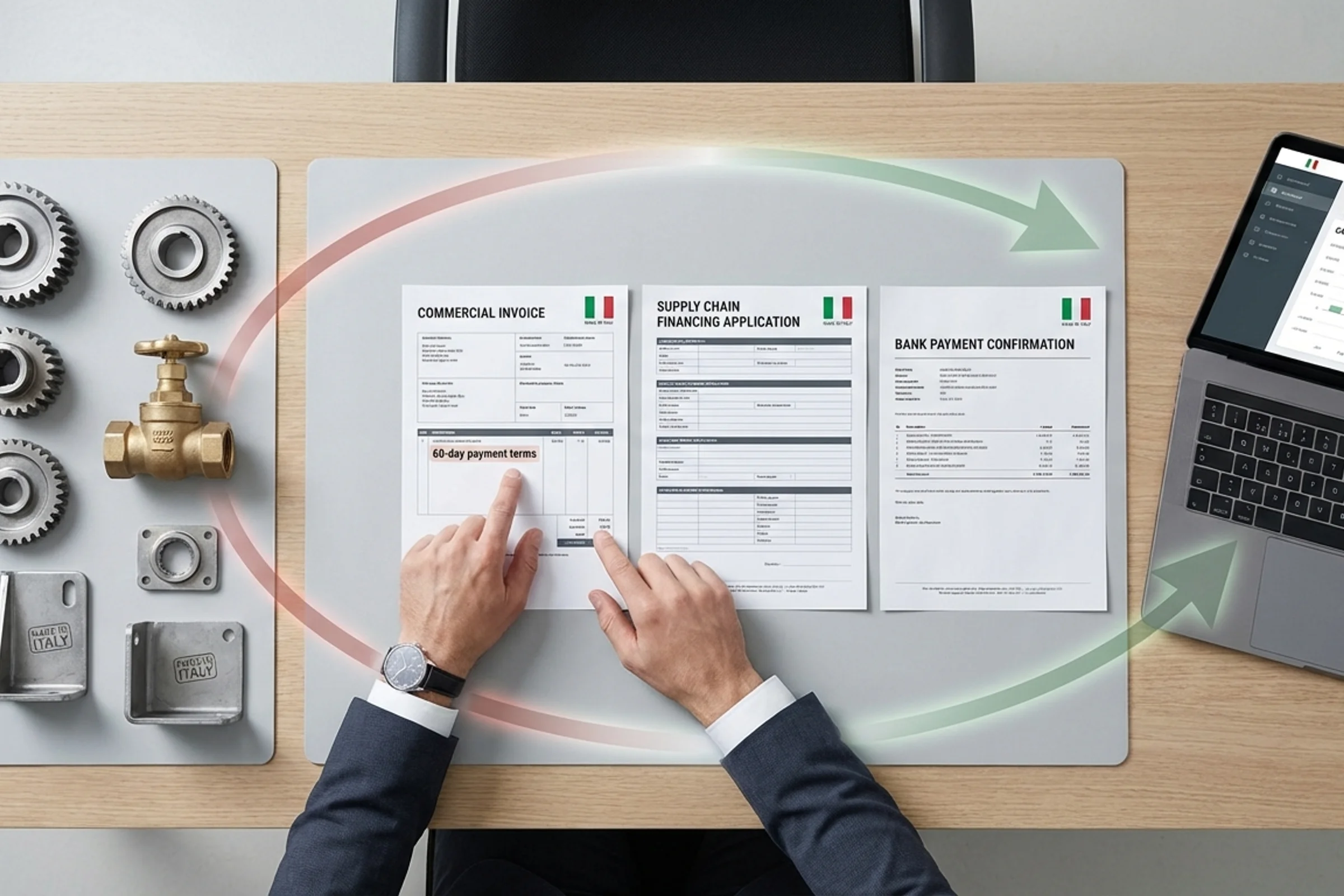
Key Takeaways
- # Maximum Payment Terms in Italian B2B Transactions: The 60-Day Rule **In Italy, B2B payment terms are capped at 60 days from invoice receipt under D.Lgs 231/2002 (Italian Legislative Decree 231/2002, which implements the EU Late Payment Directive).** This mandatory limit applies to all business-to-business transactions unless parties have a written agreement with specific justification for longer terms. ## What the 60-Day Payment Rule Means for International Companies Under Italian law, the maximum payment deadline between businesses is set at **60 days from the date the invoice is received**. This regulation, established by D.Lgs 231/2002, aims to protect suppliers—particularly small and medium enterprises—from extended payment delays that can damage cash flow and business sustainability. **Key provision:** Companies can only extend payment terms beyond 60 days if they create a **written agreement with explicit justification** (*accordi scritti motivati*) explaining why longer terms are necessary. Simply including extended terms in standard contract language is not sufficient—the justification must demonstrate legitimate business reasons for the exception. ## Implications for Foreign Businesses Operating in Italy For US, UK, German, and French companies doing business with Italian suppliers or customers, this means: - **Your standard international payment terms may not be valid in Italy** if they exceed 60 days - **Verbal agreements or standard purchase order terms don't override** the statutory limit - **You need documented, justified written agreements** to negotiate longer payment windows - **Italian suppliers can legally demand payment** and claim interest on overdue amounts after 60 days This creates a different compliance landscape than in markets like the US, where payment terms are generally determined by commercial negotiation without statutory maximums. ## Enforcement and Penalties The Agenzia delle Entrate (Italian Revenue Agency, equivalent to the IRS) and Italian commercial courts actively enforce these payment term limits. Companies violating the 60-day rule face automatic interest charges on late payments, calculated at the European Central Bank reference rate plus eight percentage points. Understanding these mandatory payment terms is essential for cash flow planning, contract negotiation, and maintaining compliant operations in the Italian market.
- Default interest charges in Italy are calculated as the ECB (European Central Bank) base rate plus 8 percentage points and automatically accrue from the day following the payment deadline without requiring formal notice or demand.
- With the ECB rate at 3.15%, late payment interest amounts to 11.15% annually: on an €85,000 (~$92,000 USD) invoice paid 120 days late, €3,099 (~$3,360 USD) in interest accrues.
- # 73% of Italian metalworking SMEs face payment delays beyond 60 days, with average DSO of 95 days, freezing significant capital In Italy's metalworking sector, cash flow pressure has reached critical levels. 73% of small and medium-sized enterprises (SMEs) in the mechanical engineering and metalworking industry experience payment delays exceeding 60 days, with an average Days Sales Outstanding (DSO) of 95 days. This systematic delay pattern locks up substantial working capital that could otherwise fuel business growth, inventory purchases, or operational stability. For foreign companies operating in or supplying to the Italian metalworking sector, these extended payment cycles represent a fundamental operational challenge. Unlike payment practices in Anglo-Saxon or Northern European markets, Italian B2B transactions—particularly in traditional manufacturing sectors—follow considerably longer payment timelines that require specific cash flow management strategies and working capital planning. ## Why Italian metalworking companies face chronic payment delays Italian metalworking SMEs operate within a payment culture deeply embedded in the country's business ecosystem. Several structural factors drive these extended DSO figures: **Supply chain positioning and bargaining power.** Most metalworking SMEs function as sub-suppliers to larger manufacturers or construction companies. This subordinate position in the supply chain leaves them with limited negotiation leverage on payment terms. Large buyers routinely impose 60, 90, or even 120-day payment windows, and smaller suppliers must accept these conditions to maintain contracts. **Regulatory enforcement gaps despite EU directives.** Italy implemented the EU Late Payment Directive (2011/7/EU) through D.Lgs 231/2002 (Italian Late Payment Law), which theoretically protects creditors and establishes interest penalties for late payments. However, enforcement remains weak. SMEs rarely pursue legal action against late-paying clients due to fear of relationship damage, legal costs, and the notoriously slow Italian court system, which can take years to resolve commercial disputes. **Cultural acceptance of extended payment cycles.** In the Italian business environment, particularly in traditional sectors like metalworking, extended payment terms have become normalized. What would be considered unacceptable payment behavior in Germany or the United States operates as standard practice in Italy, creating a self-reinforcing cycle where everyone delays because everyone else does. **Liquidity cascades through the supply chain.** When large manufacturers or construction firms experience their own cash flow pressures, they extend payment timelines downstream. This creates a liquidity cascade effect where payment delays compound through multiple supply chain tiers, with the smallest suppliers absorbing the greatest financial stress. ## The hidden costs of 95-day DSO for metalworking businesses A 95-day average collection period doesn't simply mean delayed revenue—it creates measurable operational and financial damage: **Working capital immobilization.** For a metalworking company with €1,200,000 (~$1,300,000 USD) in annual revenue, a 95-day DSO means approximately €312,000 (~$340,000 USD) is perpetually tied up in accounts receivable. This capital cannot be used for raw material purchases, equipment upgrades, employee wages, or new market opportunities. **Financing cost multiplication.** To bridge the cash flow gap created by slow-paying clients, companies must rely on external financing. Italian SMEs typically access short-term credit through bank overdrafts with interest rates ranging from 6% to 12% annually, or through factoring services that can cost 8-15% depending on client risk profiles. These financing costs directly erode already thin manufacturing margins. **Strategic growth constraints.** Capital tied up in receivables cannot fund business development. Metalworking companies that could invest in CNC machinery, automation technology, or market expansion instead allocate financial resources to simply maintaining operations while waiting for customer payments. **Administrative resource drain.** Managing a large receivables portfolio with numerous overdue invoices consumes significant administrative capacity. Staff time devoted to payment follow-ups, reconciliation, and dispute resolution represents opportunity cost that could be directed toward productive activities. **Competitive disadvantage in international markets.** Foreign competitors from countries with healthier payment cultures can operate with leaner working capital structures, offering more competitive pricing or better payment terms to their own customers—advantages Italian metalworking SMEs cannot match while managing 95-day collection cycles. ## How foreign companies should approach Italian metalworking payment dynamics Companies from the US, UK, Germany, or France engaging with Italian metalworking suppliers or customers must adapt their financial expectations and operational approaches: **Build extended payment cycles into cash flow projections.** Do not assume Anglo-Saxon payment norms will apply. When budgeting for Italian operations or supply relationships, model 90-120 day payment cycles as the baseline scenario, not the exception. This prevents liquidity surprises and enables appropriate financing arrangements. **Negotiate payment terms explicitly and document thoroughly.** Italian commercial relationships often rely on implicit understandings that can shift when convenient. Formalize payment terms in detailed contracts, specify due dates precisely, and establish penalty structures for late payment. Work with an Italian commercialista (Italian CPA and business advisor) to ensure contract language aligns with Italian commercial law and provides enforceable protections. **Implement proactive credit management from day one.** Before extending credit to Italian customers, conduct thorough credit checks through Italian business information providers like Cerved or CRIF. Monitor payment behavior closely from the first transaction. Italian commercial culture often tests new suppliers' payment enforcement willingness—setting firm precedents early prevents deterioration later. **Consider trade finance instruments for significant exposure.** For substantial contracts with Italian metalworking companies, explore letters of credit, bank guarantees, or export credit insurance through providers like SACE (Italian export credit agency) or international underwriters. These instruments add cost but dramatically reduce payment risk. **Understand the commercialista's role in payment discussions.** In Italy, the commercialista often manages client payment discussions and cash flow decisions. When pursuing overdue payments, engaging the client's commercialista rather than only operational contacts can sometimes accelerate resolution, as these advisors understand the legal implications and urgency better than operational staff. **Leverage FatturaPA (Italy's mandatory B2B e-invoicing system) timestamps.** Since 2019, all Italian B2B invoices must be transmitted through the FatturaPA electronic invoicing system, which creates legally binding timestamps. This system provides clear documentation of invoice delivery dates, strengthening your position in payment disputes and eliminating claims of "we never received the invoice." ## Technology solutions addressing Italian receivables challenges Modern accounting automation platforms like Mentally.ai help Italian metalworking companies—and their foreign partners—manage the receivables complexity that contributes to extended DSO: **Automated payment monitoring and alerts.** Rather than manually tracking dozens or hundreds of invoices across multiple customers, automated systems flag approaching due dates and overdue accounts, enabling timely follow-up before minor delays become chronic problems. **Cash flow forecasting incorporating payment pattern analysis.** Advanced platforms analyze historical payment behavior by customer, identifying which clients consistently pay late and by how much. This intelligence enables accurate cash flow projections that account for realistic collection timelines rather than contractual payment terms. **Integrated dunning processes.** Automated reminder sequences can escalate systematically—from gentle pre-due-date reminders to progressively firmer overdue notices—maintaining collection pressure while freeing staff from repetitive administrative tasks. **Real-time receivables visibility for financing decisions.** When working capital needs arise, having immediate visibility into receivables aging, customer payment patterns, and expected collection timelines enables more informed decisions about when to activate credit lines, pursue factoring, or adjust purchasing plans. For foreign companies managing Italian entities or supply relationships, these automation capabilities provide the operational infrastructure needed to navigate Italy's challenging payment environment without proportionally increasing administrative overhead. ## Sector-specific dynamics in Italian metalworking receivables Not all metalworking companies experience identical payment pressures. Understanding sector variations helps target solutions more effectively: **Automotive supply chain.** Metalworking companies supplying Italian automotive manufacturers (Stellantis, automotive component producers) typically face the most rigid payment terms imposed by powerful buyers, but often experience more predictable payment patterns due to established supply chain systems. **Construction-related metalworking.** Companies producing structural steel, metal fixtures, or construction components face the most volatile payment risk. Italy's construction sector experiences notorious payment delays, with projects subject to funding interruptions, contractor disputes, and bureaucratic complications that cascade into supplier payment delays. **Machinery and equipment manufacturing.** Firms producing complete machines or industrial equipment often negotiate milestone-based payment terms tied to delivery and commissioning, which can reduce total DSO if structured effectively, but create revenue timing complexity. **Precision components and subcontracting.** Smaller shops performing precision machining, metal treatment, or specialized processes for larger manufacturers face the greatest bargaining power disadvantage and therefore the longest payment cycles with least recourse. ## Regulatory developments and payment practice evolution Italian and EU policymakers recognize the SME liquidity crisis created by extended payment terms: **EU Late Payment Directive enforcement discussions.** The European Commission has periodically proposed strengthening enforcement mechanisms for the Late Payment Directive, including potentially automatic penalty applications and faster dispute resolution procedures. However, implementation timelines remain uncertain. **Italian government payment behavior improvements.** Public sector payment delays to suppliers historically exceeded private sector delays. Recent years have seen modest improvements in government payment DSO, from catastrophic levels (180+ days) to merely problematic (60-90 days), slightly reducing total receivables pressure on companies with public contracts. **Digital invoicing expanding transparency.** The FatturaPA system, while initially adding compliance burden, has created unprecedented visibility into actual payment practices. This data foundation enables both regulatory monitoring and potential future policy interventions based on empirical payment behavior rather than anecdotal evidence. **Banking sector pressure on payment terms.** Italian banks, under ECB supervision, increasingly scrutinize SME clients' receivables quality when evaluating creditworthiness. This creates indirect pressure on businesses to improve their own payment discipline to maintain banking relationships. ## Practical action steps for managing Italian metalworking receivables Whether you're a foreign company working with Italian metalworking suppliers, managing an Italian subsidiary, or advising clients on Italian operations, these concrete steps address payment delay challenges: **Establish payment term policies aligned with Italian realities.** Define clear policies that acknowledge Italian payment culture while setting boundaries. For example: "Standard terms 60 days, will negotiate to 90 for strategic accounts, 120 days requires advance payment or guarantee." **Implement systematic credit evaluation.** Before extending credit, check the Centrale Rischi (Italian Credit Register maintained by Banca d'Italia) through your bank, review company financials filed with the Italian Business Register, and analyze payment behavior data from credit bureaus. **Create customer payment scorecards.** Track each customer's actual payment performance (not just contractual terms), ranking clients by reliability. Use this intelligence to prioritize relationship investments, adjust credit limits, and identify accounts requiring protective measures. **Develop relationship-appropriate collection strategies.** Italian business culture values personal relationships highly. Balance firmness on payment obligations with relationship preservation by calibrating collection intensity to account strategic value and payment history. **Build receivables management into commercialista relationship.** If you operate in Italy through a subsidiary or permanent establishment, ensure your commercialista actively manages receivables monitoring and collection strategy, not just tax compliance and financial reporting. This commercial dimension of the commercialista role is often underutilized by foreign companies. **Consider joining industry consortia.** Industry associations in the metalworking sector sometimes organize collective approaches to payment term standardization or provide shared credit information. Participation can provide competitive intelligence and occasionally collective bargaining power on payment conditions. **Leverage technology to scale receivables management.** As receivables volume grows, manual tracking becomes unsustainable. Platforms like Mentally.ai provide the automated monitoring, forecasting, and workflow management that allows small finance teams to manage complex receivables portfolios effectively. The 95-day DSO reality in Italian metalworking isn't simply a payment inconvenience—it's a structural challenge requiring adapted strategies, appropriate expectations, and systematic management. Foreign companies that understand these dynamics and build appropriate safeguards can successfully navigate Italian business relationships while protecting their financial stability.
- Contractual clauses imposing payment terms exceeding 60 days may be null and void if considered seriously unfair, especially when imposed by large buyers on small and medium-sized enterprises (SMEs).
- # Proof of Invoice Receipt in Italy: The 7-Day Presumption Rule **In Italy, businesses must prove the exact date they received an invoice using either PEC (Posta Elettronica Certificata, Italy's certified email system) or FatturaPA (Italy's mandatory B2B e-invoicing system).** Without this documented proof, Italian tax authorities presume the invoice was received seven days after its issue date—a presumption that can significantly impact payment terms, late payment interest calculations, and tax compliance. ## Why Invoice Receipt Date Matters Under Italian Law The receipt date of an invoice determines critical compliance and financial obligations in Italy: - **Payment deadline calculations**: Italian late payment regulations (Legislative Decree 231/2002) tie payment terms to the invoice receipt date, not the issue date - **Late payment interest**: Interest accrues from the contractual payment deadline calculated from receipt - **VAT deduction timing**: For some businesses, the VAT deduction period depends on when the invoice was received - **Dispute resolution**: In commercial litigation, proving when an invoice was received affects penalty calculations and liability determinations ## The 7-Day Legal Presumption **Italian law establishes a default presumption: if a business cannot prove the actual receipt date, the invoice is legally presumed received seven days after the supplier issued it.** This presumption shifts the burden of proof to the recipient. For a supplier who issued an invoice on January 15, 2025, Italian authorities will presume the customer received it by January 22, 2025—unless the customer provides acceptable proof of a different receipt date. ## Acceptable Proof Methods in Italy Italian commercial law recognizes two primary methods for documenting invoice receipt dates: ### PEC (Posta Elettronica Certificata) PEC is Italy's legally recognized certified email system that provides timestamped proof of sending and delivery. When invoices are transmitted via PEC, both sender and recipient receive digitally signed delivery receipts with legal evidentiary value equivalent to registered mail with return receipt. ### FatturaPA Electronic Invoicing Italy's mandatory B2B electronic invoicing system (required for most business transactions since 2019) automatically creates an audit trail through the Sistema di Interscambio (SdI, the government's invoice exchange system). The SdI generates timestamped delivery notifications that serve as official proof of invoice transmission and receipt. ## Implications for Foreign Companies Operating in Italy **International businesses with Italian subsidiaries, branches, or supplier relationships must understand this requirement.** If your company receives paper invoices or standard email invoices from Italian suppliers without PEC or FatturaPA: - You cannot contest the 7-day presumption in payment disputes - Late payment interest calculations will use the presumed receipt date - Your accounts payable processes may need adjustment to accommodate Italian legal requirements **For cross-border transactions**: Foreign companies not subject to Italy's mandatory FatturaPA requirements should request PEC transmission from Italian suppliers or implement alternative documented receipt confirmation systems to avoid the automatic 7-day presumption. ## Best Practices for Compliance To maintain control over invoice receipt dates and avoid disputes: 1. **Prioritize FatturaPA**: If your Italian entity is required to use electronic invoicing, ensure proper SdI integration for automatic receipt documentation 2. **Request PEC transmission**: For suppliers not using FatturaPA, request invoice delivery via PEC 3. **Document standard email receipts**: If receiving invoices via regular email, implement systematic acknowledgment procedures with timestamps 4. **Coordinate with your commercialista**: Your Italian CPA and business advisor should review your invoice receipt processes to ensure compliance with Italian commercial law requirements **Companies using AI-powered accounting platforms can automate receipt date tracking and ensure proper documentation across all invoice channels, reducing compliance risk and dispute exposure in the Italian market.** --- *Understanding Italian invoice receipt requirements is essential for managing payment obligations and avoiding unnecessary interest charges. Foreign companies should work with qualified Italian advisors to implement compliant processes that protect their commercial interests.*
- # Pro-Soluto Factoring: Immediate Cash Flow Without Credit Risk **Pro-soluto factoring allows companies to transfer receivables and recover immediate liquidity while shifting the insolvency risk to the factoring company.** In Italy, pro-soluto factoring (non-recourse factoring) is one of the most powerful financial tools available to businesses seeking to optimize cash flow without bearing the burden of customer payment default. This arrangement transfers both the receivable and the associated credit risk to a specialized factoring company. ## What Is Pro-Soluto Factoring? Pro-soluto factoring is a financial transaction where a business sells its trade receivables to a factoring company at a discount. The key distinguishing feature: the factoring company assumes full responsibility for customer insolvency risk. If your client fails to pay, you retain the funds already received—the loss falls entirely on the factoring provider. This contrasts with pro-solvendo factoring (recourse factoring), where the seller remains liable if the debtor doesn't pay and must reimburse the factoring company. ## How Pro-Soluto Factoring Works in Italy Italian companies using pro-soluto factoring follow this process: 1. **Credit transfer**: The business assigns its receivables to the factoring company through a formal credit assignment agreement 2. **Immediate payment**: The factoring company advances typically 70-90% of the invoice value immediately 3. **Risk transfer**: The factoring company evaluates the debtor's creditworthiness and assumes the insolvency risk 4. **Final settlement**: When the customer pays, the factoring company releases the remaining balance minus fees 5. **Default protection**: If the customer defaults, the business keeps the advance without obligation to repay ## Key Benefits for Foreign Companies Operating in Italy **Immediate liquidity without debt**: Unlike traditional loans, factoring doesn't create debt on your balance sheet. You're selling an asset (receivables), not borrowing against it. **Complete risk elimination**: The factoring company conducts credit assessments and bears the full consequence of non-payment, allowing you to accept larger orders from Italian customers without extending your risk exposure. **Simplified credit management**: The factoring provider typically handles collection activities, reducing your administrative burden in navigating Italian commercial relationships and payment practices. **Predictable cash flow**: Convert unpredictable payment terms (often 60-90 days in Italian B2B transactions) into immediate, plannable liquidity. ## Costs and Considerations Pro-soluto factoring in Italy typically costs more than pro-solvendo factoring due to the transferred risk. Expect: - **Advance rates**: 70-90% of invoice value - **Factoring fees**: 1-5% of invoice value, depending on customer creditworthiness and invoice volume - **Interest charges**: Applied to the advanced amount, typically calculated daily The factoring company will evaluate each customer's credit profile. They may decline receivables from debtors they consider too risky or impose concentration limits on exposure to any single customer. ## Tax and Accounting Implications in Italy Under Italian accounting standards, pro-soluto factoring is treated as a definitive sale of receivables. This has important consequences: **For financial statements**: The receivable is removed from your balance sheet immediately upon transfer. The discount (difference between face value and amount received) is recorded as a financial expense. **For tax purposes**: The factoring fee is generally deductible as an operating expense for Italian corporate income tax (IRES) and regional production tax (IRAP) purposes. Your commercialista (Italian CPA and business advisor) should verify proper documentation to support deductibility. **For VAT**: The factoring transaction itself doesn't trigger additional VAT obligations—the original invoice VAT treatment remains unchanged. ## When Pro-Soluto Factoring Makes Sense This financing tool is particularly valuable for foreign companies in Italy when: - You're scaling operations and need working capital without diluting equity or taking on debt - Your Italian customers have extended payment terms (60-120 days) that strain cash flow - You lack the local expertise or resources to assess Italian customer creditworthiness - You want to accept larger orders from new Italian clients without increasing risk exposure - Your business model requires predictable, steady cash flow despite variable collection cycles ## Pro-Soluto vs. Pro-Solvendo: Choosing the Right Structure The choice between pro-soluto (non-recourse) and pro-solvendo (recourse) factoring depends on your risk appetite and cost sensitivity: Choose **pro-soluto** when risk transfer justifies higher costs—when operating in unfamiliar Italian markets, dealing with new customers, or when your balance sheet cannot absorb potential defaults. Choose **pro-solvendo** when you have confidence in your Italian customers' creditworthiness and want lower fees. You retain insolvency risk but pay less for the financing. ## Factoring and Italian Compliance When implementing factoring arrangements in Italy, ensure compliance with: **Civil Code requirements**: The credit assignment must follow the procedures outlined in Articles 1260-1267 of the Italian Civil Code, including proper notification to debtors when required. **Anti-money laundering**: Factoring companies in Italy operate under strict AML regulations. Expect thorough due diligence on your business and potentially on your customers. **Privacy regulations**: Transfer of customer information to factoring companies must comply with GDPR and Italian privacy law (D.Lgs 196/2003, as amended). Your commercialista can ensure the contractual structure meets Italian legal requirements and optimizes tax treatment. ## Finding the Right Factoring Partner in Italy The Italian factoring market includes banks, independent factoring companies, and international providers. When evaluating options: - **Industry specialization**: Some providers focus on specific sectors with deeper expertise in those customer bases - **International capability**: If you're a foreign company, choose a provider experienced with cross-border operations - **Technology integration**: Modern factoring platforms can integrate with accounting systems, reducing administrative burden - **Transparency**: Ensure clear communication about fees, advance rates, and approval processes ## The Bottom Line Pro-soluto factoring transforms Italian receivables into immediate cash while eliminating credit risk. For foreign companies navigating Italian payment practices and customer credit uncertainty, this tool can accelerate growth without the constraints of traditional financing. The higher cost compared to recourse factoring represents insurance against customer default—insurance that may be particularly valuable when operating across borders in markets where credit assessment is challenging. As with any financial decision in Italy, consult your commercialista to structure the arrangement optimally for your tax position and ensure compliance with Italian commercial law requirements.
Summary
The Italian Legislative Decree D.Lgs 231/2002 establishes that for B2B (business-to-business) transactions between companies, the maximum payment term is 60 days from the date of receipt of the invoice. If this period is exceeded, late payment interest automatically accrues at the European Central Bank (ECB) rate plus an additional eight percentage points. Currently, with the ECB rate set at 3.15%, this results in a late payment interest rate of 11.15% per annum, which begins to accrue automatically without the need for a formal notice of default. In Italy, 73% of small and medium-sized enterprises (SMEs) in the metalworking sector experience payment delays beyond the 60-day mark, with an average Days Sales Outstanding (DSO) of 95 days compared to a sector benchmark of 60-65 days, thereby immobilizing millions of euros in receivables. Contractual clauses that stipulate payment terms longer than 60 days can be deemed abusive and therefore null and void if they are severely unfair, especially when imposed unilaterally by large clients on SMEs suppliers. This law applies to all commercial transactions between companies in any sector, including metalworking and automotive. To substantiate the date of receipt of an invoice, it is crucial to use certified email (PEC) or electronic invoicing; otherwise, invoices are assumed to have been received seven days after issuance. Pro-soluto factoring represents an operational solution for obtaining immediate liquidity by selling receivables to the factoring company, which assumes the risk of default.
B2B Payment Delays: Operational Guide for Manufacturing SMEs
Meta Description: Complete guide to D.Lgs 231/2002 (Italian Late Payment Law) for manufacturing SMEs: 60-day terms, ECB+8% default interest, abusive clauses, non-recourse factoring, AGCM penalties. CFO strategies with calculation examples.
1. The 95-Day Problem
September 2023.
Marco Ferri, CFO of a manufacturing company in Veneto with €18M (~$19.4M USD) in revenue, reviews the monthly receivables report.
DSO: 95 days.
Translation: Customers pay on average 3 months and 5 days after invoicing.
Industry benchmark? 60-65 days.
€4.7 million (~$5.1M USD) in blocked receivables. Almost an entire year of work not yet collected.
Marco calls his sales manager: “Why do customers pay at 90-120 days?”
“It’s normal in the automotive sector. If we don’t accept, they go to competitors.”
But is it really “normal”?
NO.
A specific law exists, D.Lgs 231/2002 (Italian Late Payment Law implementing EU Directive 2000/35/EC), which states:
Maximum B2B payment term: 60 days.
Beyond = ILLEGAL (except justified exceptions).
Yet 73% of Italian manufacturing SMEs accept payment terms beyond 60 days without knowing they can legally contest them and demand automatic default interest.
This article explains:
- What D.Lgs 231/2002 says (in CFO language, not legalese)
- How to calculate exact default interest
- When a payment term clause is legally null and void
- How factoring works (non-recourse vs recourse)
- What to do operationally Monday morning
Target audience: CFOs, Controllers, Finance Managers of B2B manufacturing SMEs.
2. D.LGS 231/2002: The 5 Articles Every CFO Must Know
2.1 What is D.Lgs 231/2002
Full name: Legislative Decree October 9, 2002, No. 231
Title: “Implementation of directive 2000/35/EC on combating late payment in commercial transactions”
In plain terms: Italian law that protects SMEs from payment delays in B2B transactions.
Applies to:
✅ B2B commercial transactions (business → business)
✅ B2PA transactions (business → Public Administration)
❌ Does NOT apply to B2C (business → final consumer)
Sectors: ALL, including manufacturing, automotive, construction, services.
2.2 Art. 4 - Payment Terms (The Heart of the Law)
LEGAL TEXT:
"Unless otherwise agreed between the parties and subject to paragraph 2 provisions, the payment period cannot exceed the following terms:
a) 30 days from invoice receipt date, if debtor is Public Administration;
b) 60 days from invoice receipt date, in commercial transactions between businesses."
CFO TRANSLATION:
Basic rule: Customer must pay WITHIN 60 days from invoice receipt.
Possible exceptions:
- Written agreement between parties (BUT see Art. 7 on abusive clauses)
- Specific sectors with objective justifications
Practical example:
Invoice No. 1245 issued: March 15, 2025
Customer receives invoice: March 18, 2025 (PEC email)

LEGAL due date: March 18 + 60 days = May 17, 2025

If customer pays after May 17:
→ PAYMENT DELAY
→ AUTOMATIC default interest (see Art. 5)
ATTENTION - Receipt Date:
The relevant date is NOT invoice issue date, BUT customer receipt date.
How to prove receipt?
- PEC email (certified email with delivery receipt)
- Registered mail with return receipt
- Electronic invoicing portal (timestamp)
Without proof of receipt: Presumed received 7 days after issuance (case law practice).
2.3 Art. 5 - Default Interest (The Value of Money)
LEGAL TEXT:
"The default interest rate equals the reference rate plus eight percentage points.
Such interest accrues automatically from the day following the payment term expiration, without need for formal notice of default."
CFO TRANSLATION:
Calculation formula:
Default Interest Rate = ECB Rate + 8%

Example 2025:
ECB Rate (December 2025): 3.15%
Default rate: 3.15% + 8% = 11.15% annual
AUTOMATIC = NO formal demand letter required.
Only requirements:
- Payment term expiration (60 days or contractual)
- Customer does NOT pay
- Interest starts automatically the day after
Concrete calculation example:
INVOICE #1245

Amount: €85,000 (~$91,800 USD)
Receipt date: March 18, 2025
Legal due date: May 17, 2025 (60 days)
Customer pays: September 15, 2025 (120 days late)

INTEREST CALCULATION:

Days late: 120
Default rate: 11.15% annual
Formula: €85,000 × 11.15% × (120/365)

Default interest: €3,099.04
TOTAL AMOUNT CLAIMABLE:
Principal: €85,000
Interest: €3,099.04
TOTAL: €88,099.04 (~$95,150 USD)
ECB Rate Updates (where to find them):
Official rates: https://www.ecb.europa.eu/stats/policy_and_exchange_rates/key_ecb_interest_rates/html/index.en.html
Historical Italian default rates:
┌──────────────────────────────────────┐
│ YEAR    │ ECB   │ DEFAULT (ECB+8%)  │
├──────────────────────────────────────┤
│ 2020    │ 0%    │ 8.00%             │
│ 2021    │ 0%    │ 8.00%             │
│ 2022    │ 2.00% │ 10.00%            │
│ 2023    │ 4.50% │ 12.50%            │
│ 2024    │ 3.65% │ 11.65%            │
│ 2025    │ 3.15% │ 11.15%            │
└──────────────────────────────────────┘
Accounting software: Must automatically calculate interest updated every semester.
2.4 Art. 7 - Abusive Clauses (When Contracts Are Null and Void)
LEGAL TEXT:
"Clauses excluding the right to default interest or providing for interest lower than Article 5 are null and void if they are grossly unfair to the creditor.
Clauses imposing payment terms exceeding 60 days are presumed grossly unfair, unless justified by the particular nature of the contract."
CFO TRANSLATION:
NULL clauses (examples):
❌ “Payment 90 days end of month” (too long, no justification)
❌ “Default interest 2% annual” (below legal 11.15%)
❌ “No interest for delays <120 days” (excludes legal right)
❌ “Payment upon final customer product sale” (indeterminate)
VALID clauses (examples):
✅ “Payment 90 days from invoice date, justified by: 60-day production cycle + 20-day customer testing + progress payment liquidity. Clause separately accepted.”
✅ “Payment 60 days end of month from delivery (max 90 days total), with legal default interest plus 2pp (total ECB+10%).”
Difference: Objective justification + separate clause signature.
What Does “Grossly Unfair” Mean?
A clause is unfair if:
- Clear disproportion (90-120 days without reason)
- Unilateral imposition (large customer vs small SME)
- No counter-benefit (no discount for extended terms)
Case law (real example):
Milan Court, Judgment 3421/2021:
Manufacturing SME vs large automotive company.
Contract: “Payment 120 days from invoice date.”
SME challenges clause as abusive.
Judgment:
"The 120-day clause is grossly unfair because:
- Not justified by technical reasons
- Imposed by dominant customer (100× supplier revenue)
- No compensatory discount for SME
Clause NULL AND VOID. Legal 60-day term applies.
Customer ordered to pay default interest on excess 60 days."
How to Defend Yourself (Operationally):
STEP 1: Identify suspect clauses in contract
ABUSIVE CLAUSE CHECKLIST:

□ Term >60 days? (YES = suspect)
□ Missing written justification? (YES = abusive)
□ Customer much larger than you? (YES = imbalance)
□ No discount for extension? (YES = gratuitous)
□ Default interest <legal? (YES = null)
STEP 2: Formal modification request
PEC EMAIL TO CUSTOMER:

Dear XYZ Customer,

Supply contract No. ABC dated January 15, 2025
provides for 90-day payment term from invoice date.

D.Lgs 231/2002 Art. 7 establishes nullity of clauses
>60 days without objective justification.

Please confirm:
a) Technical/commercial justification for 90-day term
b) Or contract modification to standard 60 days

Absent response within 15 days, we will consider
legal 60-day term applicable.

Best regards
STEP 3: If customer ignores → Invoice with 60-day due date
INVOICE #1245

Amount: €85,000
Issue date: March 15, 2025
Due date: May 15, 2025 (60 days, not 90-day contract)

Notes: "Legal 60-day due date per D.Lgs 231/2002.
Contractual 90-day clause deemed abusive."
STEP 4: Customer doesn’t pay at 60 days → Payment order (decreto ingiuntivo, Italian fast-track court collection) + interest from day 61
2.5 Art. 4-bis - Enhanced SME Protections (2023 Amendment)
ADDED by D.L. 13/2023 (Italian Emergency Decree):
“In commercial transactions where the creditor is an SME and the debtor is a large enterprise, clauses providing payment terms exceeding 60 days are presumed always abusive, subject to contrary proof by the debtor.”
CFO TRANSLATION:
IF you are an SME (<250 employees, <€50M revenue):
AND customer is large enterprise (>250 employees):
THEN: Clause >60 days is ALWAYS abusive (legal presumption).
Consequences:
✅ Burden of proof on customer (must prove it’s NOT abusive)
✅ You can demand 60-day payment without proving anything
✅ Easier to win in court
Practical example:
TYPICAL CASE:

Supplier: Manufacturing SME, 80 employees, €15M
Customer: Large automotive, 2,500 employees, €850M

Contract: "Payment 120 days end of month"

BEFORE 2023:
SME had to prove clause abusive (difficult)

AFTER 2023 (Art. 4-bis):
Clause PRESUMED abusive automatically
Customer must prove it's justified (nearly impossible)

RESULT: SME always wins
Penalties for Repeated Abuse (Art. 7-bis):
If large enterprise systematically imposes >60-day clauses on multiple SMEs:
Report to AGCM (Italian Competition Authority, equivalent to FTC)
Penalties: Up to 5% of revenue of the large enterprise.
Example: Automotive customer €850M → Fine up to €42.5M (~$45.9M USD).
3. FACTORING: When Selling Receivables Makes Sense
3.1 What is Factoring (In Plain Terms)
CFO definition:
You sell your receivables to a specialized company (factor) that pays you immediately 80-90%, then it collects from the customer.
Why do it?
- Convert 90-day receivables into immediate liquidity (15 days)
- Avoid customer insolvency risk
- Free up working capital
Cost: 2-4% annually on receivables sold.
3.2 Non-Recourse vs Recourse: The Crucial Difference
┌─────────────────────────────────────────────────────┐
│ RECOURSE FACTORING (pro-solvendo)                  │
├─────────────────────────────────────────────────────┤
│ How it works:                                       │
│ • Factor advances 80-90% of receivable             │
│ • IF customer pays → Factor keeps remaining 10-20% │
│ • IF customer DOESN'T pay → Factor HAS RECOURSE   │
│   (you must return advance)                        │
│                                                     │
│ Cost: 1.5-2.5% annual                              │
│ Risk: REMAINS with seller (you)                    │
│ Best for: Temporary liquidity only                 │
└─────────────────────────────────────────────────────┘

┌─────────────────────────────────────────────────────┐
│ NON-RECOURSE FACTORING (pro-soluto)                │
├─────────────────────────────────────────────────────┤
│ How it works:                                       │
│ • Factor purchases receivable DEFINITIVELY         │
│ • Pays you 75-85% immediately                      │
│ • IF customer DOESN'T pay → Factor's problem      │
│   (you already collected, done)                    │
│                                                     │
│ Cost: 2.5-4% annual                                │
│ Risk: TRANSFERRED to factor                        │
│ Best for: Risky customers, crisis sectors          │
└─────────────────────────────────────────────────────┘
Numerical comparison example:
RECEIVABLE: €100,000 due in 90 days

─────────────────────────────────────────────────
OPTION A - Wait for Customer:

Collection: €100,000 (if they pay)
Time: 90 days
Risk: 15% insolvency = €85,000 expected value
Cost: €0

─────────────────────────────────────────────────
OPTION B - Recourse Factoring:

Advance: €90,000 (90%)
Time: 15 days
Cost: €100K × 2% × (90/365) = €493
Net: €89,507
Risk: IF customer doesn't pay → Must return €90K

─────────────────────────────────────────────────
OPTION C - Non-Recourse Factoring:

Advance: €82,000 (82%)
Time: 15 days
Cost: €100K × 3.5% × (90/365) = €863
Net: €81,137
Risk: ZERO (even if customer doesn't pay)

─────────────────────────────────────────────────
EXPECTED VALUE COMPARISON:

Wait: €85,000 expected (15% risk)
Recourse: €89,507 IF customer pays (but risk remains)
Non-Recourse: €81,137 CERTAIN
When each makes sense:
WAIT if:
- Customer AAA rating (risk <5%)
- Positive historical relationship
- Liquidity not urgent
- Low margins (<10%, factoring cost erodes too much)
RECOURSE if:
- Need temporary liquidity (investment, taxes)
- Customer BBB rating (5-10% risk)
- Want to maintain risk control
NON-RECOURSE if:
- Customer in crisis sector (automotive, construction 2024)
- Customer BB rating or lower (>15% risk)
- Very large receivable (>€200K, concentration risk)
- Prefer certainty vs maximization
3.3 Factoring Regulation: L. 52/1991
Law February 21, 1991, No. 52 - “Regulation of business receivables assignment”
Key CFO points:
1. Assignment Valid EVEN Without Customer Notification
Art. 1 L. 52/1991:
“Assignment is effective toward the assigned debtor even without their acceptance or notification.”
Translation: You can assign receivable to factor WITHOUT telling the customer.
BUT: If you don’t notify, customer can pay you (not factor) and be released.
Solution: Always notify (registered mail or PEC).
2. Standard Notification Template
RECEIVABLE ASSIGNMENT NOTIFICATION

Dear ABC SpA Customer

We hereby inform you that the receivable
arising from:

Invoice No. 1245 dated March 15, 2025 - €85,000

has been assigned to:
FACTOR XYZ SpA, Via Roma 10, Milan
VAT No. 12345678901

From today, payment must be made EXCLUSIVELY to:

IBAN: IT60X0542811101000000123456
Payee: Factor XYZ SpA
Reference: "Receivable assignment Invoice 1245/2025"

Best regards,
Fornitore Metalmeccanica Srl
Consequences of missing notification:
Customer pays you → Factor demands money → You must transfer to factor (double work).
Customer pays you → You use money → Factor has recourse → Problems.
3. Tax Deductibility of Factoring Costs
Art. 6 L. 52/1991:
“Amounts due to the assignee are deductible.”
Translation: Factoring commissions and interest are tax-deductible for IRES/IRAP (Italian corporate income taxes).
Accounting example:
FACTORING COSTS YEAR 2025:

Receivables assigned: €1,200,000
Average commission: 3%
Total cost: €36,000

ACCOUNTING ENTRY:

Debit: Other financial expenses €36,000
Credit: Bank account €36,000

TAX RETURN:

Deductible costs: €36,000
Tax savings (24% IRES): €8,640

NET COST: €36,000 - €8,640 = €27,360
Attention: Deductible ONLY if factor is authorized entity (bank, financial intermediary per TUB - Italian Banking Act).
3.4 When Factoring Makes Sense (Decision Tree)
FACTORING DECISION TREE

START: I have receivable €X due in Y days

├─ Customer AAA rating + positive history?
│  ├─ YES → WAIT (no factoring)
│  └─ NO → Go below
│
├─ Need urgent liquidity (<30 days)?
│  ├─ YES → Go below
│  └─ NO → WAIT (monitor)
│
├─ Receivable >€100K?
│  ├─ YES → Go below
│  └─ NO → Factoring NOT worthwhile (high fixed costs)
│
├─ Customer in risky sector (automotive, construction)?
│  ├─ YES → NON-RECOURSE FACTORING
│  └─ NO → Go below
│
├─ Customer BB rating or lower?
│  ├─ YES → NON-RECOURSE FACTORING
│  └─ NO → RECOURSE FACTORING
Numerical parameters:
Factoring MAKES SENSE if:

(Customer insolvency rate × Receivable) > Factoring cost

Example:
Customer 20% insolvency risk
Receivable €200,000
Expected value: €200K × 80% = €160,000

Non-recourse factoring 3.5%:
Collection: €200K × 82% = €164,000
Cost: €7,000

€164,000 (certain) > €160,000 (expected)

FACTORING MAKES SENSE ✅
4. AGCM Penalties for Systematic Delays
4.1 What is AGCM and When It Intervenes
AGCM: Italian Competition Authority (Autorità Garante della Concorrenza e Mercato)
Jurisdiction: Penalizes companies that:
- Systematically impose abusive >60-day clauses
- Structurally delay payments
- Abuse dominant position vs SMEs
Procedure:
STEP 1: SME reports abusive behavior
- Online AGCM form
- Attachments: contracts, invoices, demand letters
STEP 2: AGCM investigation (6-12 months)
- Verifies if behavior is systematic
- Hears large enterprise
STEP 3: Penalty
- Up to 5% annual revenue of debtor
- Order to modify future contracts
4.2 Real AGCM Penalty Cases 2020-2024
CASE #1: Large Retail vs Food Suppliers
AGCM Decision 28547/2021
Facts:
- Retail chain imposes 90-120-day clauses on 300+ suppliers
- No technical justification
- Threatens exclusion from shelves if they refuse
Penalty:
- €15 million (2.3% revenue)
- Obligation to renegotiate contracts to 60 days
CASE #2: Automotive Tier 1 vs Manufacturing Sub-suppliers
AGCM Decision 29102/2022
Facts:
- Large auto components company (€2.1B revenue)
- Standard 120-day end-of-month clause to all sub-suppliers
- 85% sub-suppliers are SMEs <€20M
Penalty:
- €28 million (~$30.2M USD) (1.3% revenue)
- Obligation to pay 60 days from 2023
Result for SMEs:
- 40 sub-suppliers recovered €12M (~$13M USD) in past-due receivables
- Average DSO -45% (from 110 days to 60 days)
4.3 How to Report to AGCM (Practical Procedure)
WHEN to report:
✅ Customer is large enterprise (>€50M revenue)
✅ Clause >60 days without justification
✅ Systematic behavior (>10 similar contracts)
✅ You tried negotiation without result
WHAT you need:
REPORT DOCUMENTATION:

□ Contracts with abusive clauses (at least 3)
□ Invoices with >90-day delays (at least 10)
□ Ignored demand letters (email, PEC, registered mail)
□ Customer financial statements (prove large enterprise)
□ Other supplier testimonials (if possible)
WHERE to report:
https://www.agcm.it/competenze/tutela-del-consumatore/segnalazioni
Online form → Section “B2B unfair commercial practices”
TIMELINE:
- Investigation: 6-12 months
- Penalty (if confirmed): Immediate
- Effect: Customer MUST pay arrears + modify future contracts
5. Operational Strategies for CFOs
5.1 Anti-Abuse Standard Contract
CORRECT PAYMENT CLAUSE:
Art. 8 - Payment Terms and Methods

8.1 TERM
Customer shall pay within 60 days from invoice
receipt date, unless otherwise agreed in writing
and justified per Art. 4 D.Lgs 231/2002.

8.2 METHOD
Payment to IBAN IT60... via bank transfer.

8.3 DEFAULT INTEREST
In case of delay, automatic application of default
interest per Art. 5 D.Lgs 231/2002 (ECB rate + 8%)
from the day following due date.

8.4 RIGHT TO SUSPEND
If delay >30 days on 2+ invoices, Supplier may
suspend deliveries until regularization.

8.5 RECOVERY COSTS
Customer reimburses legal collection costs
(attorney, payment order, enforcement).

Customer Signature: ____________
Date: ___________
This protects you 100%.
5.2 Receivables Dashboard with Automatic Alerts
KPIs to monitor weekly:
B2B RECEIVABLES DASHBOARD

┌──────────────────────────────────────────┐
│ KPI              │ VALUE  │ TARGET │ GAP │
├──────────────────────────────────────────┤
│ DSO              │ 95d    │ 65d    │-30d │🔴
│ Receivables >90d │ €1.8M  │<€500K  │ 🔴  │
│ Receivables >120d│ €420K  │ €0     │ 🔴  │
│ Top customer 1   │ €680K  │<€300K  │ 🔴  │
│ % past due total │ 38%    │ <15%   │ 🔴  │
└──────────────────────────────────────────┘

IMMEDIATE ACTIONS:
⚠️ Customer A: €680K 120d overdue → Payment order
⚠️ Customer B: €285K 95d overdue → Formal PEC demand
⚠️ Customer C: €180K 70d overdue → Phone + repayment plan
Automatic alert software:
ALERT T+50d: Automatic email to customer
ALERT T+60d: Default interest starts
ALERT T+75d: Formal PEC + interest calculation
ALERT T+90d: Attorney prepares payment order
Cost: €50-€80/month accounting software
Benefit: Zero forgotten receivables
5.3 Standard Collection Process
RECEIVABLES COLLECTION PROCESS

T+0: Invoice issued, due in 60 days

T+50d (10 days before due date):
├─ Automatic reminder email
└─ "Friendly reminder due May 15, 2025"

T+60d (due date):
├─ If NOT paid: Default interest starts
└─ Email: "Past due, courteous reminder"

T+75d (+15d overdue):
├─ Formal PEC
├─ Default interest calculation
└─ "Pay within 15 days or legal action"

T+90d (+30d overdue):
├─ Attorney prepares payment order (decreto ingiuntivo)
├─ Last CEO-to-CEO phone call
└─ "Last chance 7 days"

T+97d (+37d overdue):
├─ File payment order
└─ Principal + interest + legal fees

T+120d:
├─ Enforceable order
└─ Garnishment if necessary
Success rate:
- 70% pay at T+75 (formal PEC)
- 20% pay at T+90 (payment order threat)
- 10% require actual payment order
5.4 Selective Factoring Policy
RULE:
Non-recourse factoring for:
- Automotive receivables >€100K
- Customers BB rating or lower
- New customers first 3 deliveries
Quick profitability calculation:
FORMULA:

IF (Customer Risk% × Receivable) > (Factoring Cost + €500)
→ FACTORING MAKES SENSE

Example:
Automotive customer €200K receivable
BB rating = 18% insolvency risk

Expected value: €200K × 82% = €164K

Factoring 3.5%: €200K × 85% = €170K
Cost: €7K

€170K > €164K → FACTORING MAKES SENSE ✅
6. CONCLUSIONS: D.Lgs 231/2002 Compliance Checklist
The 10-Point Checklist
Take this test (10 questions):
D.LGS 231/2002 COMPLIANCE

□ 1. Do contracts have payment clauses ≤60 days?
     NO = Check if justified, otherwise NULL

□ 2. Do >60-day clauses have written justification?
     NO = ABUSIVE, you can demand 60 days

□ 3. Do invoices indicate exact due date?
     NO = Add for clarity

□ 4. Does software automatically calculate default interest?
     NO = Implement (€50/month)

□ 5. Are >60-day receivable demands documented (PEC)?
     NO = Start standard process

□ 6. Have you evaluated factoring for risky customers?
     NO = Analyze top 20% receivables

□ 7. Do you monitor DSO weekly?
     NO = Urgent KPI dashboard

□ 8. Do large enterprise customers have ≤60-day clauses?
     NO = Art. 4-bis, presumption of abuse (act)

□ 9. Have you ever reported systematic delays to AGCM?
     NO = Evaluate if customer is repeat offender

□ 10. Do you recover default interest in payment orders?
      NO = Always include it (€€€)
SCORE:
- 8-10 YES: Excellent, optimal compliance
- 5-7 YES: Good, improve some aspects
- 2-4 YES: Critical, high exposure
- 0-1 YES: Emergency, act immediately
Investment vs ROI
ANNUAL COMPLIANCE COST FOR €18M SME:
Receivables management software: €960/year
Legal consultant (6h): €1,200/year
Team training (1 day): €800/year
Factoring 15% receivables: €18,000/year (3% on €600K)
────────────────────────────────────────
TOTAL: €20,960/year (~$22,640 USD)

BENEFITS:
• DSO -30% (from 95 to 65 days)
• Freed liquidity: €1,500,000 (~$1.62M USD)
• Default interest recovered: €45,000/year (~$48,600 USD)
• Receivables losses: 0% (vs 2-3% average)
• Improved bank rating (DSCR +0.4)

DAMAGES AVOIDED:
• Automotive receivables losses: €360,000 (2% on €18M)
• Liquidity opportunity costs: €52,500 (3.5% on €1.5M)

ROI: 1,967%
Payback: 18 days
€21K invested avoids €412K (~$445K USD) in damages.
What to Do Monday Morning
3 immediate actions (2 hours total):
1. CONTRACT AUDIT (45 minutes)
Print top 10 customer contracts by revenue.
For each verify:
- Payment clause ≤60 days? NO → Mark for renegotiation
- Customer is large enterprise? YES → Art. 4-bis applies
- Written justification if >60 days? NO → Clause NULL
2. EMAIL CRITICAL CUSTOMERS (30 minutes)
Top 3 customers with:
-
60-day clauses without justification
- Systematic >90-day delays
Send PEC:
Dear Customer,

Supply contract provides 90-day term.
D.Lgs 231/2002 Art. 7 requires written
justification for terms >60 days.

Please confirm justification or agree to
modify to standard 60 days within 15 days.

Best regards
3. SETUP SYSTEM ALERTS (45 minutes)
Configure accounting software:
- Automatic T+50/60/75/90 alerts
- Default interest calculation
- Weekly DSO report
Or: Excel with formulas if no software.
Additional Resources
Complete regulations:
- D.Lgs 231/2002 full text: https://www.normattiva.it
- Updated ECB rates: https://www.ecb.europa.eu
- AGCM report form: https://www.agcm.it
Online calculators:
- Default interest: Various commercialista (Italian CPA and business advisor) sites
- Factoring ROI: Italian Factoring Association
Specialized consulting:
- Commercial law attorney (receivables collection)
- Commercialista expert in manufacturing SMEs
- Factoring companies authorized by Banca d’Italia (Bank of Italy)