Case Study Wine Bar: Business Crisis Diagnosis | SaluteImpresa
Real analysis of a wine bar in difficulty: financial indicators, signs of crisis and intervention strategies according to Legislative Decree 14/2019.
Key Takeaways
- Italian restaurants recorded 19,019 closures in 2024, the highest negative balance in a decade, despite consumers spending €96 billion on dining out.
- Il Calice d'Oro wine bar experienced a 47.2% revenue decline with beverage costs at 49.3%, far exceeding the sustainable industry benchmark of 28-35%.
- The wine bar's break-even point requires €37,200 monthly revenue, but actual revenues fell below this threshold during summer months, creating negative EBITDA.
- Despite operational losses, the business maintains €280,000 cash reserves with only €14,300 debt, providing a 4-5 year window for corrective action.
- Menu engineering, supplier renegotiation, and wine preservation systems like Coravin are recommended to reduce the unsustainable 49.3% beverage cost.
- Summer months showed the steepest declines of 35-42%, attributed to inflation, increased wine prices, and new competitor openings in the historic center.
- The case demonstrates that restaurant failures stem from inadequate financial monitoring tools rather than lack of customers or entrepreneurial passion.
Summary
The 2024-2025 financial analysis of 'Il Calice d'Oro,' a wine bar in Vicenza, Italy, reveals a business in crisis despite strong financial reserves. The establishment experienced a 47.2% revenue decline from 2024 to 2025, with monthly revenues falling from approximately €70,000 to €37,000. The most critical issue is a beverage cost of 49.3%, significantly above the industry benchmark of 28-35%, meaning nearly half of revenue is consumed by product costs. Monthly EBITDA turned negative during summer months, indicating the business loses money before accounting for taxes and depreciation. The break-even point requires €37,200 monthly revenue, which the wine bar failed to achieve consistently. However, the company maintains a surprisingly strong financial position with €280,000 in cash reserves and only €14,300 in bank debt, creating a positive net financial position of €261,000. This cushion provides a critical window for intervention, but projections show reserves will deplete in 4-5 years if current trends continue. The case exemplifies the broader Italian restaurant crisis, where 19,019 establishments closed in 2024 despite €96 billion in consumer spending, highlighting that lack of financial monitoring tools rather than customer demand drives failures.
The Silent Crisis of the Italian Catering Industry
In 2024, Italy recorded an alarming figure: 19,019 restaurant businesses closed their doors, the highest negative balance in the last decade. While consumers spent more than 96 billion euro on eating out, thousands of restaurants, bars and wine bars lowered their shutters forever.
This is not a lack of customers or a lack of passion on the part of restaurateurs. The problem is deeper: many restaurant entrepreneurs do not have the tools to understand whether they are sailing towards success or failure. As Peter Drucker said: ‘You cannot manage what you do not measure’.
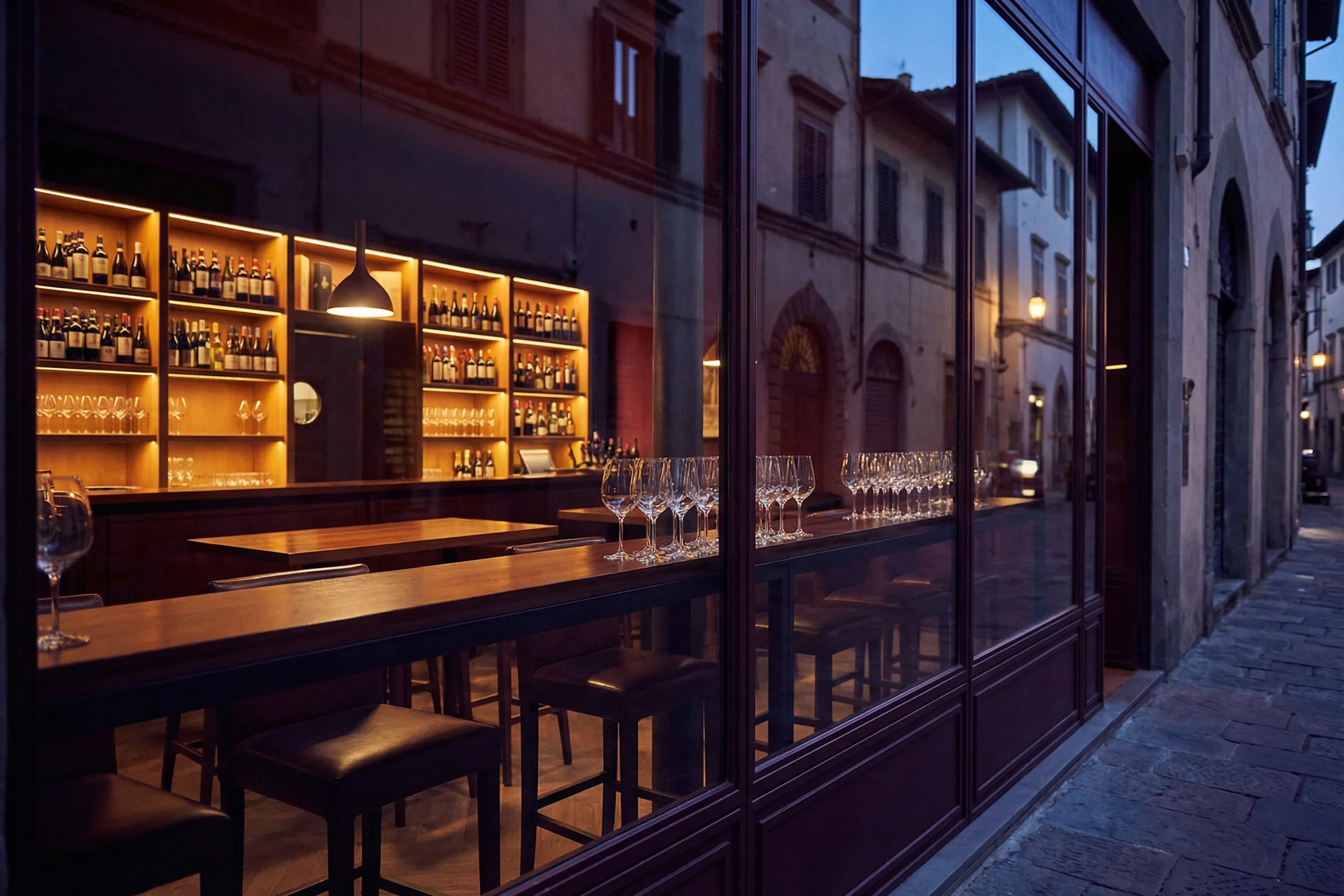
This case study analyses the financial situation of "Il Calice d’Oro " (fictitious name), a wine bar and wine shop in the historic centre of Vicenza, which faced a deep but still reversible crisis between 2024 and 2025.
Il Calice d’Oro: Context and Business Model
Business Profile
Il Calice d’Oro SRL is a family-run wine bar and wine shop located in the heart of Vicenza. Opened in 2019, it offers:
- Main service: Wine tasting with curated wine list (over 80 labels).
- Light refreshment: Cicchetti, sliced meats and local cheeses
- Target: Wine enthusiasts, young professionals, food and wine tourists
- Model: 80% table sales, 15% event catering, 5% bottle sales
It is managed by Andrea (owner, catering expert), Silvia (partner and co-manager) and Davide (operating partner). The structure is a SRL with 3 partners, therefore subject to the obligations of adequate organisational structures laid down in art. 2086 of the Civil Code.
Financial Analysis: The Numbers that Tell a Crisis
General Overview (January - October 2025 vs. 2024)
::table[panoramica_generale]
First critical observation: turnover fell by 47.2%, but the EBITDA margin improved slightly. This means that the wine bar cut costs, but not fast enough to compensate for the drop in revenue.
Monthly Revenue Analysis
::chart[ricavi_mensili_confronto]
Key Insight:
- Generalised drop of 35-40% on all months
- Critical months: June-August 2025 (summer) with drops of up to 42%**.
- Possible causes:
- Inflation and decline in customers’ purchasing power 2.
- Rising wine prices (difficult to remain competitive)
- Increased competition from recent openings in the historic centre
Deep Dive: Critical KPIs for Wine Bars and Restaurants
1. Food & Beverage Costs: The Benchmark Unveiled
The food cost (or rather, in the case of a wine bar, the ‘beverage cost’) is the first indicator to monitor.
::chart[food_cost_breakdown]
:::callout{type=“redflag” title=“RED FLAG #1: Food & Beverage Cost out of control”} A wine bar should have a beverage cost between 28% and 35%. The Golden Goblet is at 49.3%, meaning that out of every bottle sold for €30, almost €15 goes in wine cost. This is unsustainable. :::
**Possible causes
- Wine list too rich in expensive labels with low margins
- Waste (unsold open bottles)
- Excessive portions in glasses
- Non-optimised suppliers
**What to do
- Menu engineering: Analyse which wines have a margin >65% and promote them
- Reduce the menu: Keep only 40-50 high rotation labels
- Conservation systems: Invest in Coravin or gas systems to reduce waste
- Negotiate with suppliers: Change 2-3 main suppliers
EBITDA and Break-Even Point
The EBITDA (Earnings Before Interest, Taxes, Depreciation, and Amortisation) is the EBITDA, which is how much the business earns before taxes and depreciation.
::chart[ebitda_trend]
:::callout{type=“redflag” title=“RED FLAG #2: EBITDA negative in summer”} During the summer months (June-August), EBITDA is negative. This means that the wine bar loses money even before paying interest and taxes. :::
Break-Even Point:
- Monthly fixed costs: ~€19,000 (staff + rent + utilities)
- Contribution margin: ~51% (100% - 49% beverage cost)
- Break-even: 19,000 / 0.51 = 37,200€/month revenue.
Reality 2025: The wine bar made under 37K€/month in the summer months. This explains the negative EBITDA.
3. Composition of Costs
::chart[composizione_costi]
4. Liquidity and Financial Position
Despite operational problems, The Golden Chalice has a surprisingly solid financial situation:
::chart[liquidita_debiti]
:::callout{type=“success” title=“GOOD NEWS: Solid financial position”} The wine bar has €280K in the bank and only €14.3K in bank debts. It has a positive net financial position of €261K, which means it is zero in debt. :::
How is this possible?
- Probably the shareholders have capitalised the company over the years
- Previous years’ profits set aside
- No investment in expensive machinery
The risk: With an EBITDA of only 45.7K€ in 10 months (projected 55K€/year), liquidity is eroding. If the trend continues, in 4-5 years the wine bar will run out of reserves.
KPI Dashboard: Comparison with Sector Benchmark
::chart[kpi_dashboard]
::table[kpi_critici]
Adequate Organisational Structures (Art. 2086 c.c.)
Il Calice d’Oro, being a SRL, is subject to the obligation of adequate organisational structures, administration and accounting introduced by the reform of the Business Crisis Code (Legislative Decree 14/2019).
What does this mean in practice? The company must have:
- Organisational structure: Clear roles, defined procedures
- Administrative set-up: Management control, budget, monthly reporting
- Accounting set-up: Up-to-date bookkeeping, reliable balance sheets
:::callout{type=“warning” title=“Situation The Golden Chalice: Non-compliant”} Evidence of non-compliance:
- No management control system (food costs 50%!)
- No budget or forecast
- Costs not monitored monthly :::
**What to do now
- Implement a monthly monitoring system (also on Excel)
- Calculate the food cost weekly
- Make a budget 2026 with worst/best case scenario
- Appoint an administrative manager (also external, 4h/week)
Projections: Two Scenarios in Comparison
Scenario A: Status Quo (No Intervention)
::chart[proiezione_status_quo]
If the company does not intervene, the negative trend will continue with a progressive erosion of liquidity.
Scenario B: Rescue Plan
::chart[proiezione_piano_salvataggio]
With targeted action on food costs, pricing and diversification, the company can return to growth.
::table[proiezioni_comparative]
Recommended Action Plan
:::callout{type=“insight” title=“The 5 priority actions for The Golden Chalice”}
- Reduce F&B cost to 35% within 6 months (menu engineering + change of suppliers)
- Implement management control with monthly dashboard
- Diversify revenue with private events and corporate tastings
- Optimise fixed costs by renegotiating rent and utilities
- Create a payback plan with 3-year projections :::
Conclusions
The case of Il Calice d’Oro shows how even a business with good liquidity can find itself in trouble if it does not monitor its KPIs. The 47% drop in revenue is worrying, but the real emergency is the food cost at 49.3% eroding margins.
The good news? The company still has €280,000 of liquidity and zero significant bank debt. There is time to act, but we need to act now.
Do you want to analyse your company’s situation? Take our free self-assessment test to discover your risk indicators.
Data and Statistics
19.019
96 miliardi €
-47,2%
49,3%
280.000 €
37.200 €
80+
4-5 anni
Frequently Asked Questions
- What is the ideal food and beverage cost percentage for a wine bar?
- A wine bar should maintain a beverage cost between 28% and 35% of revenue. This means that for every bottle sold at 30 euros, the wine cost should be between 8.40 and 10.50 euros. When the beverage cost exceeds 40%, as in the case of Il Calice d'Oro at 49.3%, the business becomes unsustainable because margins are too low to cover fixed costs like rent, staff, and utilities.
- How many restaurant businesses closed in Italy in 2024?
- In 2024, Italy recorded 19,019 restaurant business closures, representing the highest negative balance in the last decade. This alarming figure occurred despite consumers spending more than 96 billion euros on eating out, indicating that the crisis is not due to lack of customers but rather to inadequate financial management and monitoring by restaurant entrepreneurs.
- What are adequate organizational structures under Article 2086 of the Italian Civil Code?
- Article 2086 of the Italian Civil Code, introduced by the Business Crisis Code reform (Legislative Decree 14/2019), requires limited liability companies (SRL) to implement adequate organizational, administrative, and accounting structures. In practice, this means having clear roles and procedures, management control systems with budgets and monthly reporting, and up-to-date bookkeeping with reliable balance sheets to detect business crises early.
- How do you calculate the break-even point for a restaurant or wine bar?
- The break-even point is calculated by dividing monthly fixed costs by the contribution margin percentage. For Il Calice d'Oro, with fixed costs of 19,000 euros per month (staff, rent, utilities) and a contribution margin of 51% (100% minus 49% beverage cost), the break-even point is 37,200 euros per month in revenue. Below this threshold, the business loses money even before paying interest and taxes.
- What does EBITDA measure in restaurant financial analysis?
- EBITDA (Earnings Before Interest, Taxes, Depreciation, and Amortization) measures how much a business earns from operations before accounting for financial costs, taxes, and asset depreciation. For restaurants and wine bars, EBITDA indicates the true operational profitability. A negative EBITDA, as Il Calice d'Oro experienced during summer months, means the business is losing money from core operations regardless of debt or tax considerations.
- How can a wine bar reduce its food and beverage costs effectively?
- A wine bar can reduce beverage costs through four main strategies: menu engineering to analyze and promote wines with margins above 65%, reducing the wine list to 40-50 high-rotation labels, investing in preservation systems like Coravin or gas systems to minimize waste from opened bottles, and negotiating better prices by changing 2-3 main suppliers. These actions can help bring beverage costs from unsustainable levels like 49% down to the optimal 28-35% range.
- Why did Il Calice d'Oro experience a 47% revenue drop in 2025?
- Il Calice d'Oro's 47.2% revenue drop between January-October 2025 compared to 2024 resulted from multiple factors: general inflation reducing customers' purchasing power, rising wine prices making it difficult to remain competitive, and increased competition from new openings in Vicenza's historic center. The most critical months were June-August 2025, which saw drops of up to 42% compared to the previous summer.
- Can a restaurant be in crisis even with good liquidity and no debt?
- Yes, a restaurant can face serious crisis despite strong financial reserves. Il Calice d'Oro has 280,000 euros in liquidity and only 14,300 euros in bank debt, yet remains in crisis due to operational problems. With an EBITDA of only 55,000 euros projected annually and a beverage cost of 49.3%, the company is eroding its reserves. If the negative trend continues without intervention, the wine bar will exhaust its liquidity in 4-5 years despite currently being debt-free.
- What is menu engineering for wine bars and restaurants?
- Menu engineering is a strategic analysis technique that evaluates each wine or dish based on profitability and popularity. For wine bars, it involves identifying which wines generate margins above 65% and promoting them while eliminating low-margin items. This data-driven approach helps optimize the wine list, typically reducing it from extensive offerings to 40-50 high-rotation labels that maximize both customer satisfaction and profit margins.
- What are the five priority actions to rescue a struggling wine bar?
- The five priority rescue actions are: reduce food and beverage cost to 35% within six months through menu engineering and supplier changes, implement monthly management control with KPI dashboards, diversify revenue streams with private events and corporate tastings, optimize fixed costs by renegotiating rent and utilities, and create a detailed three-year payback plan with financial projections. These actions address both immediate operational issues and long-term strategic positioning.